Showing posts with label Yakub Memon. Show all posts

Thursday, May 30, 2019

Convicted of Pune rape-murder, two issued execution warrants (Maharashtra)

Written by MAYURA JANWALKAR |Mumbai |Updated: April 21, 2019 3:45:21 am

This will be the first execution in Maharashtra after July 30, 2015, when Yakub Memon, convicted in the 1993 serial bomb blasts case, was hanged at Nagpur Central Prison.

Nearly two years after the President of India rejected their clemency petitions, two men convicted of the rape and murder of a BPO employee in Pune in 2007 are slated to be executed on June 24, according to warrants of execution issued earlier this month.

Convicted of Pune rape-murder, two issued death warrants
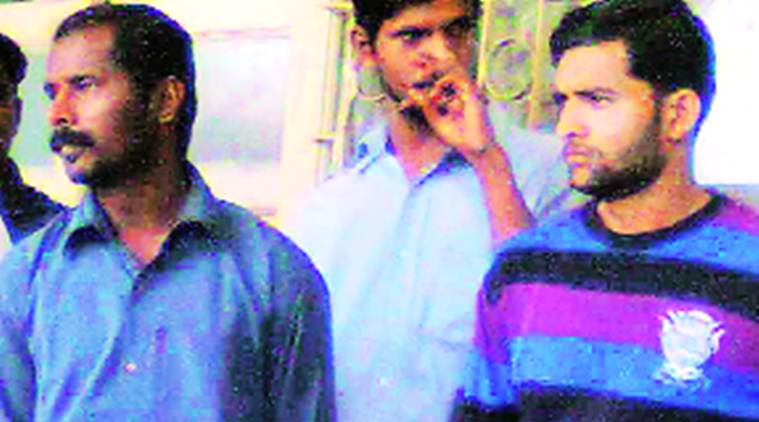
Purushottam Borate (left) and Pradeep Kokade (right) were convicted of the rape and murder of a BPO employee. Express
The principal district and sessions judge in Pune issued warrants on April 10 for the execution of Purushottam Borate, 36, and Pradeep Kokade, 31, whose death sentence was upheld by the Supreme Court on May 8, 2015. Both Borate and Kokade are lodged at the Yerwada Central Prison in Pune. A warrant, issued in the name of Borate, authorises the officer in charge of the Yerwada Central Prison to carry out the execution. Sources said a similar warrant has been issued for Kokade. The victim, Jyotikumari, who hailed from Gorakhpur, had resigned from Wipro BPO (then Spectramind) with whom she had been working for around a year. Around 10 pm on November 1, 2007, her last working day with the company, driver Borate and his friend Kokade had picked her up from her home in the office cab for her night shift. When she did not return by 10 the next morning, her brother-in-law lodged a missing complaint with the police.

Her sister had reported that Jyotikumari’s Bangalore-based friend was unable to get through to her on her cellphone after her call – made during the cab ride – was abruptly disconnected the previous night. Police found her body on the morning of November 2, 2007, at Gahunje, about 35 km from Pune. Borate and Kokade were later arrested. In March 2012, the Pune sessions court convicted the duo and sentenced them to death. The sentence was upheld by the Bombay High Court in September 2012 and by the Supreme Court in May 2015. Maharashtra Governor C Vidyasagar Rao had rejected their mercy petition in April 2016.

This will be the first execution in Maharashtra after July 30, 2015, when Yakub Memon, convicted in the 1993 serial bomb blasts case, was hanged at Nagpur Central Prison.

Sunday, December 23, 2018

Death Penalty, Dostoyevsky and The Idiot

P Muraleedharan 
Published: Mar 6, 2017, 05:59 PM IST

The customary debate on death penalty is at its peak as India sits uneasy after executing Yakub Memon, accused in the Mumbai blasts in 1993 which killed 257 persons and injured over 700. The shouting match between the votaries of justice for the victims on one side and humanists/NGOs on the other at times descend to unseemly levels as nationalism, religion and vote bank politics infiltrate various perspectives and finally dies down as the combatants themselves lose interest in the issue. Those who stand for repeal of capital punishment are accused of being soft on terror while the others are dubbed insensitive. But, as long as death penalty is in the Indian Penal Code, judges are free to sentence the accused in the raresr of rare cases to the gallows. 

In this context, it would be interesting to know what great Russian novelist Fyodor Dostoyevsky, a person who escaped death by the firing squad after securing Tsar's pardon in the last minute, wrote in his classic 'The Idiot'. (Incidentally, the novel's protagonist Prince Myshkin, a holy man in an unholy world, is vaguely modeled on Jesus Christ. It also has arguably one of the most complex woman characters in world literature in Nastasya Filippovna.) In the novel, Dostoyevsky discusses in detail all aspects of death penalty and proves why it is more heinous than the most heinous of crimes. While finishing the novel, the brilliant author wrote: 'Compassion is the most important and possibly the only law for the whole of human life.' It was to convey this message that he created Prince Myshkin, the 'title' character in 'The Idiot'. 

"The Idiot" by Fyodor Dostoevsk
In the novel, he says, 'To kill for murder is a punishment incomparably worse than the crime itself. Murder by legal sentence is immeasurably more terrible than murder by brigands. Anyone murdered by brigands, whose throat is cut at night in a wood, or something of that sort, must surely hope to escape till the very last minute. There have been instances when a man has still hoped for escape, running or begging for mercy after his throat was cut. But in the other case all that last hope, which makes dying ten times as easy, is taken away for certain. There is the sentence, and the whole awful torture lies in the fact that there is certainly no escape, and there is no torture in the world more terrible.' (In March this year, Pope Francis quoted Dostoyevsky to urge countries of the world to abolish the death penalty and condemned states still using capital punishment in a letter to the president of the International Commission against the Death Penalty.) In the first part of the novel, Myshkin speaks of an experience he had while on a trip to Lyons in France, where he witnessed a public execution. 

It goes like this: 'In France, they always cut their heads off...It's done in an instant. They lie the man down, and this broad knife falls through a machine they call the guillotine _ very powerfully and heavily _ the head flies off before you can blink an eye. The preparations are horrible. When they read the death sentence, dress him and prepare him, tie him up and drag him onto the scaffold _ all that is dreadful. People crowd in, even women _ they don't like women to look on though.' Here he shows why a death sentence is more brutal than any other punishment: '...Think! When there is torture there is pain and wounds, physical agony, and all this distracts the mind from mental suffering, so that one is tormented only by the wounds until the moment of death. But the most terrible agony many not be in the wounds themselves but in knowing for certain that within an hour, then within ten minutes, then within half a minute, now at this very instant _ your soul will leave your body and you will no longer be a person, and that is certain; the worst thing is that it is certain.' There is a section in the novel on what goes within the brain of a convict being taken to the city centre to be executed publicly. Only a person who had gone through the nightmarish trauma can provide such subtle details! 

Just read this: 'Then three or four hours were spent on usual things: the priest, the breakfast, at which he was given wine, coffee and beef. (Isn't that mockery? You think how cruel it is, and yet, by heaven, those innocent people do this out of the kindness of their hearts and are convinced they are being humane.)...Finally he is taken through the town to the scaffold. I think as he is being driven there he feels he has still an eternity to live...All around is crowd, noise, ten thousand faces, ten thousand eyes...' And, he dares to conjecture what goes on in the mind of a convict in that split second, when the blade of the machine severs his head. He wonders what would the severed head would be thinking if, for a second, if it is conscious of what has happened! Well, isn't it time for us to think of better ways, other than capital punishment, to deal with people who commit great crimes against humanity? For, there may come a time when the Grand Inquisitor fever dream in 'The Brothers Karamazov' materialize, where 'Jesus Christ' is tried for heresy and lead away for 'punishment'!

Source: https://english.mathrubhumi.com/books/books-news/death-penalty-dostoyevsky-and-the-idiot--1.1778601  (Accessed 23 December 2018)
SC heard seven death penalty appeals in 2016, confirmed none

Written by Utkarsh Anand |New Delhi |
Published: March 1, 2017 2:22:55 am 

In three cases, accused were acquitted; 397 on death row

INDICATING application of stringent tests before sending convicts to the gallows, the Supreme Court did not confirm the death penalty in any of the seven cases of criminal appeals that it decided in 2016. A year before, in 2015, the apex court had confirmed eight out of nine death penalty cases, including that of 1993 Mumbai serial bomb blasts convict Yakub Memon. According to a report compiled by the Centre on the Death Penalty, National Law University Delhi, not only did the court keep off awarding death penalty, it acquitted the accused in three out of the seven cases. While 71 cases of death sentences were pending in the apex court at the end of 2016, a total of 397 prisoners were on death row with their appeals pending either in high courts or in the Supreme Court as on December 31, 2016.

The Supreme Court of India. Photo: Ramesh Pathania/Mint
Uttar Pradesh topped the list of states with the highest number of death row prisoners at 70. It was followed by Maharashtra with 47, West Bengal 39 and Madhya Pradesh with 37. The report, made public on Tuesday, stated that 11 death row prisoners could not be classified state-wise since they were convicted under Central laws, such as the Arms Act. Only one person was sentenced to death in a rape and murder case by the SC in 2016 when it confirmed the extreme punishment at the stage of review, stated the report.

In 2016, trial courts across the country handed down the death sentence to 136 people, high courts confirmed punishment only in 15 cases in toto while the Supreme Court upheld none. Trial courts in 2015 had sentenced 70 convicts to death. More than 60 per cent of the cases in which courts awarded the death sentence were murder cases while 15 per cent were cases of murder and sexual assaults. President Pranab Mukherjee also took a call on seven mercy petitions moved by death row convicts in 2016 under Article 72 of the Constitution.

He rejected the mercy petitions of six prisoners, and commuted the death sentence of one convict. In the order of commutation, the President stated that the convict would spend the rest of his life in prison. Previous reports by the law university had said at least 62 per cent of death row inmates were first-time offenders; around 60 per cent had not completed secondary education; and nearly 75 per cent belong to economically weaker sections.

Source: https://indianexpress.com/article/india/supreme-court-heard-seven-death-penalty-appeals-in-2016-confirmed-none-4548782/ (Accessed 23 December 2018)

Thursday, December 20, 2018

75 death sentences in India last year (2015): Amnesty

Shemin Joy NEW DELHI, Apr 06, 2016, DHNS, APR 06 2016, 00:39AM IST

At least 75 people were sentenced to death in India last year with some imposed by special courts, whose proceedings did not meet international fair trial standards, a report has claimed. 

The report “Death sentences and Executions in 2015” released by Amnesty International on Tuesday also said there were at least 1,634 executions in 25 countries in 2015, which included one in India where Mumbai serial blast convict Yakub Memon was hanged. The number of executions could rise as Amnesty said it could not access data from China, which is a “state secret”. The executions for 2015 were the highest in last 25 years, it said adding it was more than 50% compared to 2014 figure of 1,061 in 22 countries. Iran follows China with 977 executions, Pakistan 326 and Saudi Arabia 158. 

While India had around 75 death sentences last year, Egypt was on the top of the list aer China with 538, Bangladesh 197, Nigeria 171 and Pakistan 121. In India, almost all death sentences were for murder while at least four people were sentenced to gallows for aggravated circumstances of rape following amendments to the Criminal Code in 2013. At least 320 people remained under sentence of death at the end of 2015. 

The Amnesty report also claimed that special courts whose proceedings “did not meet international fair trial standards” imposed death sentences in Bangladesh and India. On Memon’s execution, the report said: “he had been convicted under the Terrorist and Disruptive Activities Act 1987, a law that contains provisions incompatible with international fair trial standards”. The number of death sentences could rise as the National Crime Records Bureau (NCRB) has not provided this year’s official figures. In 2014, Amnesty had reported at least 64 death sentences while later NCRB reported that there were 95 such sentences in 2014. 

The report also noted that courts and authorities had commuted a number of death sentences during the year. Three prisoners whose mercy petitions the president had rejected in 2014 had their death sentences commuted to life imprisonments by courts. The Amnesty also found fault with the law commission for falling short of recommending abolition of death penalty for all crimes. The commission had suggested retention of death penalty for terrorism-related offences.

Source: https://www.deccanherald.com/content/538813/75-death-sentences-india-last.html (Accessed 20 December 2018)

Tuesday, December 18, 2018

Law panel recommends abolishing death penalty except in terror cases

Updated: Aug 31, 2015 23:39 IST, Avantika Mehta, Hindustan Times

The law commission has recommended abolishing the death penalty in all cases except those with charges of terrorism and waging war against the state.

The Law Commission on Monday recommended abolition of the death penalty in all but terrorism and sedition cases, in line with the “evolving standards of human dignity and decency”, signifying a more nuanced legal approach amid a national debate on capital punishment. After the issue hit the headlines recently over the execution of 1993 Mumbai blasts convict Yakub Memon, the commission noted that capital punishment failed as a deterrent and it was retributive justice which was “indefensible”, though it must be retained for terrorism-related cases in the interest of national security.  “The notion of ‘an eye for an eye, a tooth for a tooth’ has no place in our constitutionally mediated criminal justice system,” a nine-member panel of the Law Commission said in its 262nd report and added that time had come for India join the 140 countries that have abolished the death penalty, recommending a phased abolition.

Though the government has received the report, the recommendations are not binding on it. Many of the panel’s past reports are gathering dust. The commission analysed and relied upon many orders from the Supreme Court to confirm its findings that “there exists no principled method to remove such arbitrariness from capital sentencing”. It added that a lack of resources, poor investigations, and ineffective prosecution and legal aid were problems plaguing the judicial system. “Continued administration of death penalty asks…questions related to the miscarriage of justice, errors, as well as the plight of the poor and disenfranchised in the criminal justice system… administration of death penalty even within the restrictive environment of ‘rarest of rare’ doctrine is constitutionally unsustainable,” it said.

Three of the nine panel members recorded their dissent to the report. Justice (retd) Usha Mehra, a full-time panel member, and both the ex-officio members -- law secretary PK Malhotra and legislative secretary Sanjay Singh -- supported retaining the death penalty. The commission’s head, Justice AP Shah, who retired on Monday, noted in the report that the irreversible punishment was open to human error, even at the stage of clemency and mercy powers. “Even the exercise of mercy powers is sometimes vitiated by gross procedural violations and non-application of mind,” the report said, adding that “safeguards in the law have failed in providing a constitutionally secure environment for administration of this irrevocable punishment”.

Source: https://www.hindustantimes.com/india/law-panel-recommends-abolishing-death-penalty-except-in-terror-cases/story-cvcuNeAm8ZyOvhq505W7BL.html (Accessed on 18 December 2018)

'93 Mumbai Blasts' Convict Yakub's Essay Says 'We' Are One Big Family 'India'

Published: 25th July 2015 12:07 PM | Last Updated: 25th July 2015 01:35 PM


Yakub Menon, a convict of Mumbai serial blasts wrote an essay praising the way Indian constitution has brought unity in diversity in the nation.


Yakub Menon, a convict of Mumbai serial blasts, who might be hanged to death on July 30, wrote an essay expressing his absolute trust in the Indian constitution. "Constitution of India reflects unity in diversity," was the title of the essay Yakub wrote on November 26, 2013 in an essay competition organized by the Indra Gandhi National Open University (IGNOU). Yakub's death sentence was backed by the Supreme Court of India in the same year. Yakub's essay reads: "The need of the hour is to see that each of us 'WE' must think himself/herself to be a member of one family i.e. India. We should be considerate to lesser privileged. We must learn to tolerate and love each other as a family member, keeping with our tradition we should love all nations and become citizens of this global village — one great family. Each of us should play our role properly, sincerely and truly, otherwise this great constitution will remain on paper only."

The convict of the Mumbai serial blasts who is currently kept at the Tihar Jail got "A-grade" for the essay but could not qualify for the prize as the essay exceeded the given word limit. Although any good student could have managed to scramble the words in order to write such an essay, but ironically the word of peace and unity came from the person convicted for being involved in the heinous terror acts during the Mumbai serial blasts in 1993. Yakub has also mentioned in his essay that how the Constitution of India has done away with the British communal policies, cutting down the communal gaps in the nation. 

Yakub Memon
In the essay referring to the Constitution of India he wrote, "Reducing the wide gap between the people of India created by the British policy of divide and rule……." He further wrote, "The way national highways connect far and remote regions of your country, the articles of our Constitution connect us literally and figuratively." Yakub has also pointed out the ill practices of the people of India: "In spite of a great Constitution, greed and corruption are posing a threat to unity and India's reputation as a civilized nation. People of India need moral and spiritual cleansing to see that we do not succumb to the evil of greed and corruption.".

Source: http://www.newindianexpress.com/nation/2015/jul/25/93-Mumbai-Blasts-Convict-Yakubs-Essay-Says-We-Are-One-Big-Family-India-791451.html (Accessed on 18 December 2018)

Why former RAW officer wanted clemency for Yakub Memon

PTI New Delhi July 24, 2015
UPDATED: July 24, 2015 20:45 IST

According to Raman, Yakub had cooperated with the probe agencies and assisted them by persuading some other members of the Memon family to flee from the protection of the ISI in Karachi to Dubai and surrender to the Indian authorities.

A late top official of RAW had favoured clemency for death row convict in the 1993 Mumbai blast case Yakub Memon on the ground that he had cooperated with investigating agencies and does not deserve to be hanged . B Raman, who retired as Additional Secretary in 1994 and was in-charge of counter-terrorism, had written an article for publication containing this view but stopped it from seeing the light of the day following an after thought. But the article has now been published on 'Rediff.com' website which talks about Memon being picked up in Nepal and his subsequent formal arrest at Old Delhi railway station by the CBI.


Chennai-based B S Raghavan, brother of the late Raman, said "everything that has been published is correct and he (Raman) had written it". Raman, who passed away in 2013, had written about a "moral dilemma" in his mind ever since he had read about the sentencing of Memon to death by the court in 2006. "There is not an iota of doubt about the involvement of Yakub and other members of the family in the conspiracy and their cooperation with the ISI till July 1994. In normal circumstances, Yakub would have deserved the death penalty if one only took into consideration his conduct and role before July 1994. "But if one also takes into consideration his conduct and role after he was informally picked up in Kathmandu, there is a strong case for having second thoughts about the suitability of the death penalty in the subsequent stages of the case," said the article which has been published after taking permission from his brother.

The writer, who has written a book "The Kaoboys of RAW", spoke about many questions in his mind before writing the article but said "ultimately, I decided to write this in the belief that it is important to prevent a person, who in my view does not deserve to be hanged , from going to the gallows." According to him, Yakub had cooperated with the probe agencies and assisted them by persuading some other members of the Memon family to flee from the protection of the ISI in Karachi to Dubai and surrender to the Indian authorities. "The cooperation of Yakub with the investigating agencies after he was picked up informally in Kathmandu and his role in persuading some other members of the family to come out of Pakistan and surrender constitute, in my view, a strong mitigating circumstance to be taken into consideration while considering whether the death penalty should be implemented," he had argued in his article.

Yakub Memon
Raman said he was disturbed to notice that some mitigating circumstances in the case of Yakub Memon and some other members of the family were probably not brought to the notice of the court by the prosecution and that the prosecution did not suggest to the court that these circumstances should be taken into consideration while deciding on the punishment to be awarded to them. "In their eagerness to obtain the death penalty, the fact that there were mitigating circumstances do not appear to have been highlighted," he said. About his arrest part, Raman wrote that in July 1994, some weeks before his retirement, he was informally picked up in Kathmandu, with the help of the Nepal police, driven across Nepal to a town in Indian territory, flown to Delhi by an aircraft of the Aviation Research Centre and formally arrested in Old Delhi by the investigating authorities and taken into custody for interrogation.

"The entire operation was coordinated by me," he said. Yakub was in Kathmandu to consult a lawyer about surrendering before the court but was advised against it and asked to return to Pakistan. "Before he could board the flight to Karachi, he was picked up by the Nepal police on suspicion, identified and rapidly moved to India," he said.

Source: https://www.indiatoday.in/india/story/raw-official-b-raman-on-yakub-memon-284510-2015-07-24 (Accessed on 18 December 2018)

Death row convict Yakub meets wife, daughter in jail

Updated: Jul 23, 2015, 22:00 PM IST
Source: IANS

Death row convict Yakub Memon on Thursday morning met his wife and daughter in the Nagpur Central Jail amidst tight security.

Nagpur: Death row convict Yakub Memon on Thursday morning met his wife and daughter in the Nagpur Central Jail amidst tight security. Memon's wife Rahin (42), daughter Zubeda (21) and some other relatives were permitted to meet him in the visitors' room inside the jail premises for around an hour. Incidentally, Rahin Memon was also an accused in the March 12, 1993, Mumbai serial blasts case, but was acquitted by Special TADA Court Judge P.D. Kode in 2006.

On Monday, Yakub's cousin and confidant Rahim Memon met him in jail along with some other relatives. Memon, 53, is likely to be executed at the Nagpur Central Jail premises in early morning of July 30. Chief Minister Devendra Fadnavis will make a statement in the Maharashtra legislature on July 29, a day before the planned hanging. Barely hours after the Supreme Court on Monday rejected his curative petition, Memon sent a clemency petition to Maharashtra Governor C.V. Rao seeking commutation of his death sentence to life imprisonment.

On Thursday morning, he moved the apex court again, challenging the death warrant issued by a Mumbai Court last week for his execution on July 30. Memon sought a stay on the ground that due procedure was not followed for issuing the execution orders. He also submitted before the Supreme Court that the death warrant was issued before he could exhaust all his legal remedies. The date of execution (July 30) was fixed even as his curative petition was pending before the apex court, he said. Memon, a chartered accountant, was convicted and awaded the death penalty for his role in the March 1993 Mumbai blasts which left 257 people dead and 712 others injured.

Source: http://zeenews.india.com/news/maharashtra/death-row-convict-yakub-meets-wife-daughter-in-jail_1635148.html (Accessed on 18 December 2018)

Debate over hanging Yakub Memon: Why death penalty can't be done away with

S Murlidharan Jul 23, 2015 17:11:41 IST
Updated Date: Jul 23, 2015 17:11 PM

Every time the hangman’s noose is readied, the case for and against capital punishment springs up for animated debate in the media. The arguments are by now familiar. The abolitionist school says there could be a miscarriage of justice if subsequent events prove the innocence of the individual. They also argue some evidence may show the extenuating circumstances may establish that it wasn’t cold-blooded murder. Cynics wonder how only people from the backward segments of the society and minorities figure in the rarest of rare list. They blame it on the inability of such accused to defend themselves by hiring the services of legal eagles. The votaries of capital punishment see merit in the eye-for-eye equation, the bedrock of a retributive justice system.

While Europe, barring Belarus and Kazakhstan, swears by abolition and has stopped awarding and executing death penalty, the US has been divided on the issue for long, and 18 of the 50 states have abolished the death sentence. The Indian law and jurisprudence on the issue is clear--- the death sentence to be awarded in the rarest of rare cases. The 18 states in the US that have abolished death penalty must ponder if the right to possess a gun conferred by the second amendment to the US Constitution should prevail in their states because a gun in the wrong hands can result in deaths. While the right to possess a gun is often questioned in the United States, it ought to be abolished in states that have foresworn the death penalty. Arming people who can become trigger-happy and then condoning their crimes with a softer punishment is nothing but running with the hare and hunting with the hound.

Likewise, it is for the European nations like the Netherlands, Denmark and Switzerland that countenance euthanasia to ponder if this sits well with their abolitionist stance. If state taking away of life of a convict is reprehensible, then the act of mercy killing and doctor assisted suicide must be deemed equally reprehensible. It may be contended that they are not comparable because while death penalty is meted out compulsorily at the instance of the judiciary, mercy killing is voluntary. But then this is a specious argument. If states cannot end life, it cannot encourage voluntary termination of one’s life, which is sanctified as law in the Netherlands. If a convict must be allowed to live fully i.e. till God has ordained him to live, it is equally the duty of the state to take care of people suffering from pain or mental trauma rather than taking their lives, given the fact that a cure may emerge later.

Coming back to the basic issue, the abolitionist school for the death penalty misses the wood for trees. Doing away of death penalty must be presaged by a guarantee that the society would be free of wanton murders and killings. Can any government worth its salt give such a guarantee? The question is not merely rhetorical. If a government cannot prevent wanton killings, it should not take up cudgels for those indulging in such killings. Many of the Scandinavian countries are pacifists but that does not mean murders and killings don’t take place in the region. While it is debatable if death penalty is sufficiently deterrent, the truth is that the ends of justice would be met only if wanton murder is met with execution of such murderer. It is all fine to say that a lifetime imprisonment is more painful than death, but the reality is boredom is not an affliction that affects every prisoner uniformly.

The sentimental amongst the abolitionists contend that a death penalty penalises the family more the convict. That is maybe, but the poignant truth is all premature deaths are God’s punishment against the family rather than against the deceased. The one who dies prematurely leaves behind a distraught family often unable to fend for itself economically and emotionally.

Source: https://www.firstpost.com/india/debate-over-hanging-yakub-memon-why-death-penalty-cant-be-done-away-with-2358810.html (Accessed on 18 December 2018)

1993 Mumbai blasts: Death row convict Yakub Memon could be hanged on 30 July 2015

The only convict sentenced to death for his alleged involvement in the 1993 serial blasts in Mumbai, Yakub Memon, is reportedly set to be hanged on 30 July subject to the apex court hearing his plea for mercy days earlier. According to a DNA report, the 53-year-old convict could be hanged as the result of a Tada (Terrorism and Disruptive Activities (Prevention) Act) court issued a warrant to carry out the sentence as per which he is scheduled to be executed on 30 July at 7 am in the Nagpur Central Jail. The report said that Memon has moved a petition in the Supreme Court hoping to stay the execution, but for now, the state government has given its sanction for the execution and in keeping with procedure his family has also been informed of the impending hanging.

Yakub Memon
On 10 April, the Supreme Court had rejected a petition filed by Memon seeking to stay the death sentence. Memon, a former chartered accountant, is the brother of the prime accused in the case Tiger Memon. Earlier on March 21, 2013, the apex court had upheld the death sentence of Memon. The multiple blasts had claimed 257 lives and left 713 injured. CBI, which probed the blasts, had alleged that the conspiracy was hatched by Dawood Ibrahim and other absconding persons, including Yakub's brother Tiger Memon, who is believed to be hiding in Pakistan.

The court had commuted the death penalty awarded by a special TADA court to 10 others, who had planted RDX explosives-laden vehicles at various places in Mumbai, to life term by distinguishing their roles from that of Memon. Yakub, who owned an export firm allegedly handled his brother, gangster Tiger Memon’s, funds. He was accused of having funded the training of 15 youths who were sent to Pakistan for training in the use of arms and ammunition and funding the escape of the family following the blasts. The Memon family, including Yakub, had fled Mumbai before the blasts. After reportedly meeting with a family lawyer in Kathmandu in July 1994, Yakub was set to return to Karachi after being told that he was unlikely to get much mercy if he did surrender to Indian authorities.

But his being caught with multiple passports at the Kathmandu airport set off a chain of events that resulted in all the other members of the Memon family also being brought to India. His arrest remains controversial. Officially Yakub was arrested on the morning of 5 August 1994, inexplicably from the New Delhi railway station, far away from Pakistan or Dubai where the Memon family was said to be in hiding. The mercy plea of Memon had earlier been rejected by President Pranab Mukherjee on 21 May, 2014. The decision had been taken by the President following recommendations of the Maharashtra government and the Home Ministry that the mercy petition of Memon be rejected.

Updated Date: Jul 15, 2015 14:58 PM

Source: https://www.firstpost.com/india/1993-mumbai-blasts-death-row-convict-yakub-memon-could-be-hanged-on-30-july-2342974.html (Accessed on 18 December 2018)

Thursday, May 28, 2015

Yakub Memon: A Question Of Life And Death

By Megha Bahl & Sharmila Purkayastha

29 April, 2015

PUDR notes with extreme concern the Supreme Court's decision on the 9th of April 2015, to reject Yakub Memon’s petition seeking review of his death sentence. This decision will only add another chapter to the growing instances of injustice perpetrated by the State. In the name of providing relief for those killed in the heinous Bombay blasts of 1993 one finds a punishment based on selective targeting and prejudice.

Certain facts need to be recalled to show as to why the fear of such an eventuality is real. The grounds on which the TADA court proclaimed Yakub as one of the chief conspirators and decided upon the quantum of punishment remains mired in controversy. Charged with financing arms training for young boys in Pakistan and purchase of certain vehicles, the question as to whether the charges qualify Yakub Memon to be treated on par with the likes of Dawood Ibrahim and Tiger Memon, the main accused behind the blasts, remains. The fact that Tiger Memon, was his elder brother seems to have become the more aggravating factor justifying the death sentence awarded to him by the TADA court and the Supreme Court of India.

It may be recalled that Yakub Memon had chosen to come back to India, much against the wishes of Tiger Memon, when he was arrested by the Indian authorities in 1994. Confident that the legal system would provide him and his family the necessary relief, he cooperated with the authorities in the course of the trial. It is a fact that of the 123 accused, Yakub Memon was the only one to have been awarded a death sentence in the case. In fact in its order of 21st March 2013, the Supreme Court while commuting the death sentence to life imprisonment for 10 other accused, declined to do the same for Yakub Memon. For the Court, Yakub’s decision to surrender, his good behaviour inside the prison and twenty long years of incarceration were of no consequence, in deciding upon a matter involving a question of life and death.

The rejection reflects poorly on not just the judicial system but the entire administrative machinery, that has failed to bring to justice the main perpetrators of anti Muslim carnage in December 1992 and January 1993, despite the Srikrishna Commission of Inquiry identifying a host of police officers and politicians belonging to Shiv Sena for their role. The selective pursuit of those who perpetrated heinous crimes and/or non-pursuit of mass murders perpetrated by right wing Hindutvadis or uniformed personnel, has regrettably become the hallmark of our criminal justice system which treats killings by Muslims as “acts of terrorism” whilst regular crimes by Hindus are often not pursued. To uphold death penalty for Yaqub Menon, therefore, because of his kinship with the main perpetrators who remain at large and for a crime in which his role is peripheral, is nothing short of murdering justice as it is solely a subjective decision of the Judges.

It is also imperative to ask as to what justice will be served through the execution of death sentence on Yakub Memon whose ‘crime’ appears to be his kinship to main perpetrators? Such regressive judicial pronouncement yet again convinces us that death penalty is not only irrational but it also fraught with irreversibility which PUDR finds abhorrent. Globally, there is a move within countries to progressively do away with this regressive form of punishment. PUDR therefore urges the authorities including the judiciary in this case that in the interests of justice to commute his sentence and in light of his 21 year long incarceration to release him. And in keeping with the principles of equality before law and natural justice, the accused of 1992- 1993 massacres must be tried and convicted.

Megha Bahl and Sharmila Purkayastha

(Secretaries, PUDR)

www.pudr.org

Source: http://www.countercurrents.org/pudr290415.htm [last accessed 28.05.2015]

Thursday, April 9, 2015

Death sentence against law, Yaqub Memon to SC


Last Updated: Wednesday, March 11, 2015 - 20:12 New Delhi: 

Yaqub Abdul Razak Memon, the mastermind of the 1993 Mumbai serial bomb blasts, told the Supreme Court on Wednesday that the death sentence given to him was against the law as there was no mention in the trial court judgment of holding him guilty of murder. "There is no word in the trial court judgment that I am guilty of murder or culpable homicide not amounting to murder, yet I have been awarded death sentence," counsel Jaspal Singh, appearing for Memon, told the bench of Justice Anil R. Dave, Justice J. Chelameswar and Justice Kurian Joseph. Jaspal Singh told the court that eight-nine accused, who were actually involved in the killing of people, were sentenced to life imprisonment but Memon who was accused of conspiracy to commit the terror act was awarded the death sentence. 

 The bench was told this during the open court hearing of the review petition by Memon seeking the recall of the March 21, 2013, apex court order upholding his death sentence. A series of 13 explosions on March 12, 1993 in Mumbai had killed 257 people and left 713 injured. The court on June 2, 2014 had suspended the execution of death sentence which was further extended on September 26, 2014, after it had issued notice to the Maharashtra government on his petition seeking an open court hearing. The apex court`s constitution bench on September 2, 2014, had held that the petition seeking the recall of the order upholding the death sentence will be heard in an open court by a bench of three judges. 

 Though the apex court had earlier rejected the review plea by Memon, it was taken up once again as the constitution bench by its September 2, 2014 judgment had said: "It will also apply where a review petition is already dismissed but the death sentence is not executed so far. In such cases, the petitioners can apply for the reopening of their review petition within one month from the date of this judgment." The apex court on March 21, 2013, while upholding the death sentence of Memon, had commuted the death sentence of 10 others. 

 Upholding the death sentence, the court in its March 21, 2013, verdict had sought to make a distinction between Memon and the other convicts. "To be clearer on the dominant position, the blasts on March 12, 1993 was at the discretion of the masterminds, meaning thereby, they had the effective control over the incident. It is this effective control over the incident, which is absent in the role played by rest of the appellants," the court said. 

Comparing Memon and other masterminds as "archers" and others as "arrows", the court had said: "If we say it in a metaphoric style, A-1 (Memon) and all the absconding accused were the archers whereas rest of the appellants were arrows in their hands." Commuting the death sentence of the 10 others to life imprisonment, the court had said they were mere subordinates in the execution of the conspiracy. Source: http://zeenews.india.com/news/maharashtra/death-sentence-against-law-yaqub-memon-to-sc_1559988.html [last accessed 09 April 2015]

1993 Mumbai serial blasts case: SC dismisses plea of Yakub Memon seeking review of death sentence


Amit Anand Choudhary,TNN | Apr 9, 2015, 10.45 AM IST

NEW DELHI: The Supreme Court on Thursday dismissed plea of Yakub Memon, seeking review of death sentence awarded to him in 1993 Mumbai blasts case. The apex court order paves the way for Memon's execution, which was stayed after he filed review petition in the Supreme Court. Memon is the sole death convict in 1993 blasts case, in which around 257 lost their lives after a series of bomb blasts rocked Mumbai. Memon's case was that the courts have not given any special reasons for sending him to the gallows. The apex court had in 2013 commuted death sentence of 10 convicts who had parked explosives—laden vehicles at various places in Mumbai, to life term by distinguishing their roles from that of Memon.

Dealing with the case of Memon, a chartered accountant by profession and brother of proclaimed offender Tiger Memon, the court had said he was the "driving force" and a "mastermind" behind the blasts. The designated trial court under the repealed Terrorist and Disruptive Activities (Prevention) Act had in 2006 held Memon guilty of criminal conspiracy and financing air tickets to send co-conspirators for arms and RDX training to Pakistan. The conviction was based almost entirely on retracted confessions of the approvers and other co-accused. Memon, who sources said, is not keeping good health and is under medication in Nagpur jail, had sought commutation of the death penalty also on the grounds that he cannot be punished twice for the same offence since he has already served 20 years in prison.

Memon has been in solitary confinement in a separate cell in Nagpur jail since his conviction in 2006. Prior to that, during trial, he was in Mumbai's Arthur Road jail since his return to India with his family to surrender in 1994. Neither Yakub nor any other member of his family confessed in the case. A constitution bench had earlier said a review plea must be given a hearing in an open court, and Memon sought just that. Over 250 people died and more than 700 were injured in the blasts. Yakub's parents, his three brothers and sister-in-law had returned to India with him and were all tried. While his wife, mother and brother Suleiman were acquitted, Yakub, two brothers Essa and Yusuf and sister-in-law Rubeena were convicted and sentenced.


Source: http://timesofindia.indiatimes.com/india/1993-Mumbai-serial-blasts-case-SC-dismisses-plea-of-Yakub-Memon-seeking-review-of-death-sentence/articleshow/46859691.cms [last accessed 09 April 2015]

Friday, February 6, 2015

Yakub Memon Death Sentence – Why the delay ?

Mrityunjay Kumar

Dec 12, 2014

In a temporary relief to 1993 Mumbai blast convict Yakub Memon, the Supreme Court has stayed the execution of his death penalty. This decision comes on the review plea filed by the death row convict in the Apex Court. Memon is sibling of the absconding mastermind of the blasts Tiger Memon and has been in custody for almost two decades.

While staying his hanging, a three judges bench headed by Justice AR Dave and comprising Justices J Chelameswar and Kurian Joseph posted the matter for next hearing on January 28, 2015. “It is directed that death penalty shall not be executed till the pendency of the review petition,” the judges said. Whatever be the decision of the court on January 28, but 1993 blast and all subsequent incidents of this kind were an attack on the pride of the nation and those evolved in perpetrating such a heinous crime must get severest punishment according to the law of the land.

Yakub’s brother Ibrahim Mushtaq Abdul Razak Nadim Memon, better known as Tiger Memon was a close associate of world’s one of the dreadest terrorist Dawood Ibrahim, both of them are living in Pakistan with changed identity and have been involved not only in anti-India activities but also in illegal trafficking of drugs, contract killings and terror activities. Tiger’s men including Yakub connived with Dawood Ibrahim to execute 1993 Mumbai blast, the biggest terror strike on Indian soil that time. Reports suggest that 257 people lost their life in the blast.

Yakub, a chartered accountant, may claim his innocence and his ignorance about his brother Tiger’s activities but the fact could not be overlooked that after hearing the case for more than a decade and going through many evidences, a TADA court in 2007 convicted him to death after finding him guilty of being involved in criminal conspiracy and managing financial transactions meant for the blasts. Later in March 2013, according to an Indian Express report, the SC had confirmed the death sentence awarded to Memon, holding him guilty of being the “driving spirit” behind the blasts that killed 257 people. The court had said that Memon’s “commanding position and the crime of utmost gravity” warranted capital punishment. Memon then moved a clemency petition before the President but the plea was turned down, given the seriousness of his crime.


Yakub’s crime is of very serious kind. Despite being the most educated member of his family, he agreed to assist Tiger to wage war against his mother land. Dawood and Tiger used his acumen in accounting to get funds for the blasts to kill innocent residents of Mumbai. The larger issue though here has to do with inordinate delays in carrying out Death Sentences in India and the message it sends. Especially in Terror cases, for the Death Penalty to be an effective instrument at the disposal of the State to deter potential terrorists, it needs to be executed swiftly and purporsefully with integrity and credibility to the process. The inordinate delay in carrying out Yakub Memon’s sentence sends the wrong message.

Source: http://www.niticentral.com/2014/12/12/yakub-memon-death-sentence-delay-267453.html [last accessed 06.02.2015] 


On death row, Yakub Memon appears in MA political science exam

Vaibhav Ganjapure,TNN | Jun 7, 2014, 02.40 AM IST

NAGPUR: His conviction in the Bombay bomb blasts case of 1993 and the award of death penalty has not deterred Yakub Memon from pursuing his hobby of gaining knowledge. His penchant for education has led Yakub Memon, a chartered accountant by profession, to take admission in MA (Political Science) course and he is appearing for the second year exam now.

"He appeared in the first paper on Tuesday. He is given the question paper inside 'Fasi Yard' (high security ward) on the premises of Nagpur Central Jail, where he is on death row. Being a high profile prisoner, he is not allowed to go out," Indira Gandhi National Open University's (IGNOU) regional director P Sivaswaroop told TOI. He will appear in four more papers for the course, with the second scheduled on Monday. The exam would conclude on June 28.

Sivaswaroop pointed out that Memon was not the lone death row convict to appear in the MA exam. "Over 300 prisoners are appearing for various courses of IGNOU, which is certainly a good sign. For us, Memon is just like other jail birds serving various terms behind bars," he said.

Memon's mercy petition was recently rejected by President of India Pranab Mukherjee, but his death sentence has been stayed by a division bench of the Supreme Court comprising justice JS Khehar and justice C Nagappan on June 2 while serving notice to the Maharashtra government.

This younger brother of Tiger Memon, mastermind of 1993 blasts that killed 257 innocents and injured over 700, was initially sent to the gallows by the Mumbai TADA court in November 2006. Subsequently, his death penalty was confirmed by the Bombay High Court and he was transferred to Nagpur jail. The apex court's confirmation came on March 21 last year, which termed him as the "driving spirit" behind the blasts and "mastermind of terror". He then filed a clemency petition with the President.

The IGNOU director said that Memon had earlier completed his MA (English) in second division and was conferred with a degree during the convocation on April 12, 2013, at Nagpur University's Guru Nanak Hall. But since he was on death-row, police officials refused permission to him to attend the ceremony, unlike other prisoners.

Source: http://timesofindia.indiatimes.com/city/nagpur/On-death-row-Yakub-Memon-appears-in-MA-political-science-exam/articleshow/36169586.cms [last accessed 06.02.2015]


Supreme Court stays Yakub Memon's execution in 1993 blasts case

Swati Deshpande, TNN | Dec 11, 2014, 02.54AM IST

MUMBAI: In a relief to Yakub Memon, the lone death row convict in the March 12, 1993 Mumbai serial blasts case, the Supreme Court on Wednesday issued notice to the CBI in a review plea he filed and stayed his hanging. Yakub Memon, younger brother of the absconding blasts mastermind Tiger Memon, has been in custody for almost two decades and is at present lodged in Nagpur prison. 

A bench of three judges headed by Justice AR Dave and comprising Justices J Chelameswar and Kurian Joseph granted relief to Memon, whose death sentence the President of India had upheld earlier this year. Memon moved the SC again with a review petition against the death penalty. The SC three-judge bench posted it for hearing on January 28, 2015. "It is directed that death penalty shall not be executed till the pendency of the review petition," the judges said. Earlier on June 2, the vacation bench of the SC had stayed Memon's execution and asked that his review be listed for hearing.


Memon's case is that the courts have not given any special reasons for sending him to the gallows. The designated trial court under the repealed Terrorist and Disruptive Activities (Prevention) Act had in 2006 held him guilty of criminal conspiracy and financing air tickets to send co-conspirators for arms and RDX training to Pakistan. The conviction was based almost entirely on retracted confessions of the approvers and other co-accused. 

The SC, in its 2013 judgment upholding the death sentence, had observed that "A-1 (Yakub Memon) assumed the role of Tiger Memon in India during his absence." Memon's case in the review plea is that the apex court does not refer to any independent evidence to show his role in the actual terrorist activities in the planning and execution stages. 

Memon, who sources said is not keeping good health and is under medication in Nagpur jail, has sought commutation of the death penalty also on the grounds that he cannot be punished twice for the same offence since he has already served 20 years in prison.


Yakub Memon, younger brother of the absconding blasts mastermind Tiger Memon, has been in custody for almost two decades and is at present lodged in Nagpur prison. A chartered accountant, Memon has been in solitary confinement in a separate cell in Nagpur jail since his conviction in 2006. Prior to that, during trial, he was in Mumbai's Arthur Road jail since his return to India with his family to surrender in 1994. Neither Yakub nor any other member of his family confessed in the case. A constitution bench had earlier said a review plea must be given a hearing in an open court, and Memon sought just that. 

Over 250 people died and more than 700 were injured in the blasts. Yakub's parents, his three brothers and sister-in-law had returned to India with him and were all tried. While his wife, mother and brother Suleiman were acquitted, Yakub, two brothers Essa and Yusuf and sister-in-law Rubeena were convicted and sentenced.

Source: http://timesofindia.indiatimes.com/india/Supreme-Court-stays-Yakub-Memons-execution-in-1993-blasts-case/articleshow/45464270.cms [last accessed 06.02.2015]

SC extends stay on Yaqub Memon’s death sentence


New Delhi, Sep 26 : The Supreme Court Friday stayed execution of the death sentence of 1993 Mumbai bomb blast convict Yakub Abdul Razak Memon as it issued notice to Maharashtra government on his petition seeking an open court hearing of his plea for the review of the apex court’s verdict upholding his death penalty.
Yakub Memom 

 Extending the June 2 order suspending his death sentence, a bench of Justice T.S.Thakur, Justice S.A. Bobde and Justice R. Banumathi in their order said that the execution of the death sentence will be stayed. Seeking the revival of his review petition, which was earlier dismissed after being considered in the chamber by the judges, Memon relied on Sep 2 verdict of the apex court’s constitution bench which had held that a petition seeking the recall of the apex court’s order upholding the death sentence will be heard in an open court by a bench of three judges. The constitution bench in its Sep 2 order had also said: “It will also apply where a review petition is already dismissed but the death sentence is not executed so far. In such cases, the petitioners can apply for the reopening of their review petition within one month from the date of this judgment.” 

Memon is the second death row convict whose plea for recall of the order upholding the death sentence is being revived after it was dismissed earlier. On Sep 12, the court had fixed Oct 29 for an open court hearing of Nithari serial killer death row convict Surendra Koli’s review plea which had also been dismissed earlier. The Supreme Court March 21, 2013, had upheld the death sentence awarded to Memon by the special (now lapsed) TADA (Terrorism and Disruptive Activities Prevention Act) court and confirmed by the Bombay High Court. Memon has been described as a mastermind of 1993 Mumbai bomb blasts – a series of 13 explosions in India’s business capital March 12, 1993, which claimed 257 lives and left 713 injured. President Pranab Mukherjee May 21 rejected Memon’s mercy plea. He applied for presidential pardon in October 2013. 

The TADA trial court presided over by Justice P.D. Kode had commenced the trial Nov 4, 1993, and pronounced its 4,230-page verdict July 31, 2007. The trial court awarded death sentence to 12 people, including Memon. One of them subsequently passed away. The trial court had also sentenced 20 people to life imprisonment and 46 others, including Bollywood star Sanjay Dutt, were given varying terms of imprisonment. (IANS) Source: http://odishasuntimes.com/89138/sc-extends-stay-yaqub-memons-death-sentence/ [last accessed 06.02.2015]

Monday, April 15, 2013

Yakub Memon awarded masters in English Lit


Yakub Memon, the lone convict in the 1993 Mumbai blasts case whose death sentence has been confirmed by the Supreme Court, has been awarded a master’s degree in English Literature by Indira Gandhi National Open University.

Memon, who is now in Nagpur Central Prison, and his seven fellow prisoners were awarded the degrees at a convocation held here Friday. But Memon could not attend the convocation as police refused him permission. IGNOU Regional Director Dr Shivswaroop said that if permitted, he would personally hand over the certificate to Memon.

Source: http://m.indianexpress.com/news/yakub-memon-awarded-masters-in-english-lit/1102186/
accessed on 15th April 2013