Showing posts with label death penalty maharashtra. Show all posts

Tuesday, June 4, 2019

HC upholds death penalty clause for repeat rape offenders (Maharashtra)

Updated: Jun 04, 2019 01:29 IST
The Bombay High Court amended section of the Indian Penal Code under which repeat offenders in rape cases can be awarded life imprisonment or death penalty.

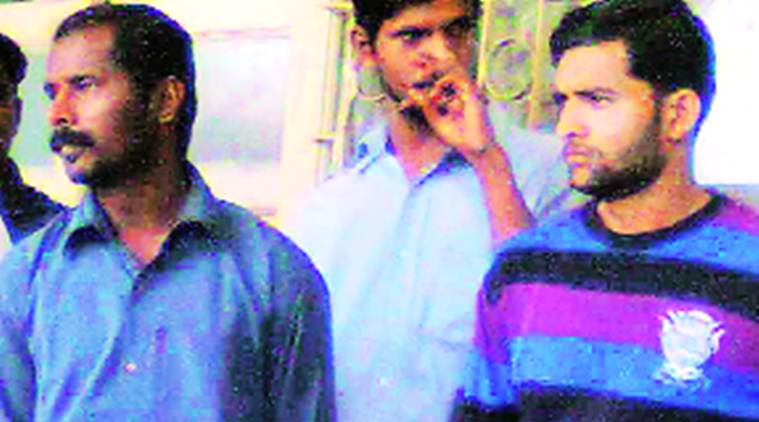
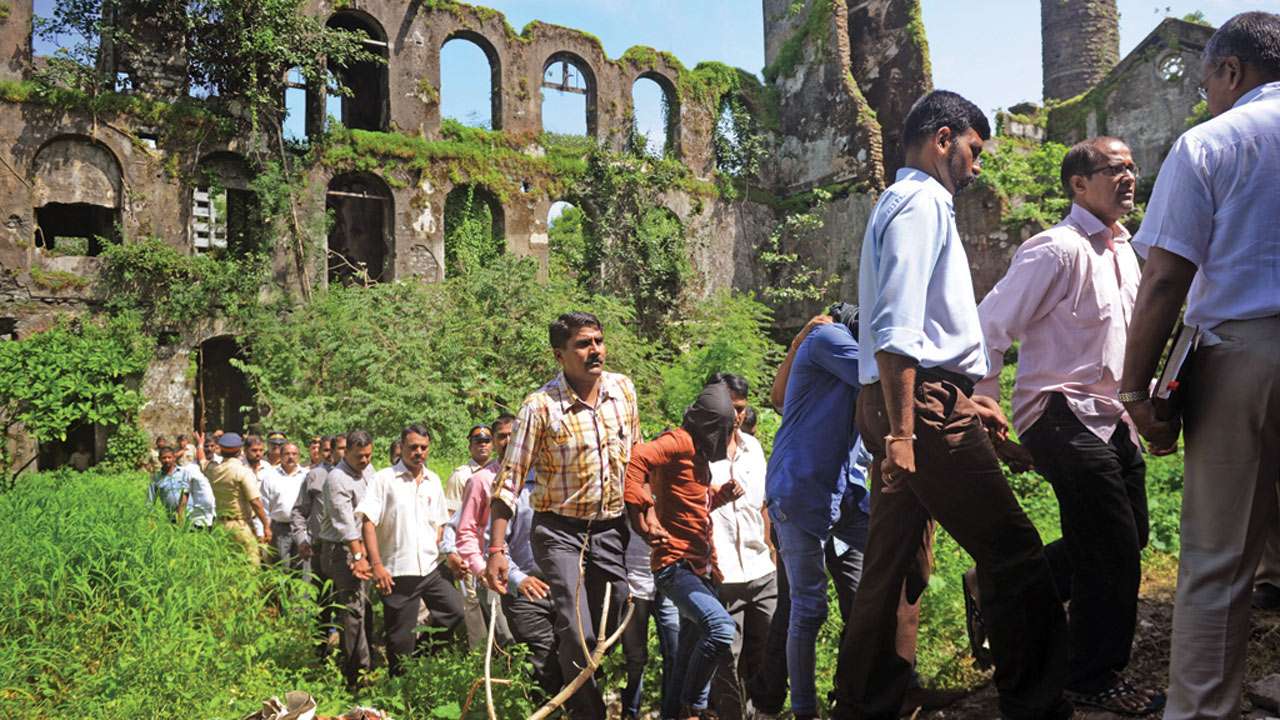
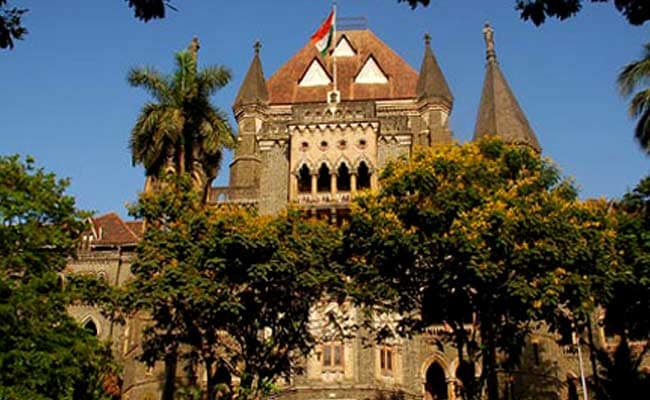
The Bombay High Court (HC) on Monday upheld constitutional validity of Section 376E of the Indian Penal Code (IPC) which states that a repeat rape offender can be awarded life imprisonment or death penalty. Vijay Jadhav, 27, Mohammed Kasim Shaikh Mohammed Hashim Shaikh, 24, and Mohammed Salim Mohammed Kudus Ansari, 32, who were convicted for the gang rape of a 23-year-old woman at Shakti Mills on August 22, 2013, had challenged constitutional validity of the legal provisions under which they were awarded life sentence in 2014. During probe, the police found the trio had also gang raped an 18-year-old woman on July 31 at the same place.

The amendment brought in place in 2013, after the brutal gang rape of a 23-year-old woman in Delhi in 2012. “Section 376-E is not ultra vires the Constitution,” a bench of justice BP Dharmadhikari and justice Revati Mohite-Dere said while dismissing petitions filed by the three convicts. The bench rejected an argument advanced on behalf of the trio that “Section 376E was arbitrary, disproportionately harsh and therefore violated the mandate of equality enshrined in the Constitution of India”. Their argument further said “the section prescribes death penalty, even when no death (murder) is caused by the accused person. The bench said it would be “highly unrealistic” to compare rape with the offence of murder, as the “consequences are incomparable”. “A victim of rape undergoes a traumatic experience with which she has to live for rest of her life. Rape is a highly reprehensible crime and demonstrates a total contempt for the personal integrity and autonomy of the victim. Needless to state, the stigma that is attached to rape victims is lifelong,” the bench said, adding, “In a sense, the offence of rape can be said to be graver than that of murder.”

The bench said the legislature, while enacting Section 376E, was aware of people’s needs and necessary measures to meet those needs (the growing incidents of rape). It added there was no doubt that “courts have the jurisdiction to interfere when the punishment prescribed is outrageously disproportionate to the offence, but legislature is in the best position to understand the needs of the society”. Besides, the judges said “there were other penal sections that prescribed death penalty for offences involving no murders”. The bench also rejected the argument that Section 376E created a new punishment – imprisonment till death of the offender – that is unknown to the penal law in India. In this regard, the judges referred to Supreme Court rulings holding that life imprisonment means imprisonment for rest of the natural life of the offender and therefore, it was not a new punishment.

In 2013, the three convicts were tried in the two cases simultaneously, and on March 20, 2014, the accused were convicted in both cases. The next day, the trial court sentenced the trio in one of the cases. When proceedings for sentencing in the other case were taken up, the prosecutor presented an application for amendment of the charge added under Section 376E. On March 24, the trial court allowed the application and invoking Section 376E handed death sentence to the trio.

Thursday, May 30, 2019

Death sentence to child rapist; 7-yr RI to kin for destroying evidence in Nashik (Maharashtra)

Nashik, May 16, 2019 (UNI) 

A local court here has awarded death sentence to a 30-year-old man on charges of raping and murdering a six-year-old girl. The court also sentenced three members of the accused's family to seven years Rigorous Imprisonment(RI) each for destroying the evidence. 

In Wednesday's order, District & Sessions Court Judge Suchitra Godkhe held the primary accused Vilas Annasaheb Mahale guilty for raping the girl and strangling her to death in Male Dumala village of Dindori tehsil here. According to the prosecution, the accused lured the minor girl into his house in April, 2017 and killed her after rape. 

The prosecution said that the parents of the accused-Annasaheb Mahale (54) and Shaila Mahale (45)-and his brother Pravin Mahale (28) helped him in destroying the evidence. UNI RDS KAZ SB 1650/ 1655

Man gets death sentence for killing couple by pouring acid on them (Maharashtra)

09 MAY 2019 Last Updated at 11:36 PM | SOURCE: PTI

A 28-year-old man was Thursday awarded death sentence by the district court here for killing a married couple by pouring acid on them.

District and Sessions Judge R N Majgaonkar also ordered compensation in accordance to a Maharashtra government scheme for acid attack victims for the couple's orphaned children, aged five and eight years. The convict, Guddu Krish Yadav, was a worker at a chemical factory in Boisar MIDC near here in 2015 when the incident took place.

Image result for Guddu Krish Yadav
Guddu Krish Yadav
According to the prosecution, Yadav poured concentrated sulphuric acid on his colleague Rajkumar Balram Ravidas (35) and his wife Geeta (30) when they were fast asleep in the chemical company's quarters, leading to their death. The incident was an outcome of a fight over a mobile phone. In November 2015, Yadav had stolen the mobile phone of Ravidas, who complained to their boss. Enraged over being reprimanded by the boss, Yadav poured acid on Ravidas and his wife while they were sleeping, Additional Public Prosecutor Deepak Tare had told the court.

The judge relied on eyewitness account of Yadav's co-workers and said this is a "rarest of the rare case" where the accused "deserves nothing less then the death sentence". The prosecution has proved beyond all reasonable doubts the charge under IPC section 302 (murder) against the accused, he said. Around a dozen people were examined as prosecution witnesses in the case. 

Life in the Hangman’s Shadow (Maharashtra)

By Nikita Doval
Thursday, May 30, 2019

Freed by the Supreme Court after 16 years spent on death row for a crime they did not commit, five men are desperately trying to rebuild their lives. More than a cause for celebration, their acquittal is reason to ask: how many more are wasting away in our jails?

His hands, they said, held down a girl as she was raped and then went to work battering his victim and her family to death. Rajya Appa Shinde holds up his left hand, marked by newly-formed calluses on his palm. “This is the hand of a man who works hard, always has,” he says to anyone who is willing to listen. “It is also the hand of a man who has been treated unfairly.”

Freed after 16 years on the death row, Rajya has found work digging ditches in Maharashtra’s Devgarh for the municipal corporation. He’s been trying, too, to rebuild the threads of his life: make an Aadhaar card, open a bank account, find a wife.

Bitterness, though, clings to his body, like chains once did.

“I am out of prison, yes, but what do I have? Ditches to dig, and a reputation that means no one is willing to marry their daughter to me. I am ready to start a second time over, but the world may not allow it.”

THE KILLINGS
Trambak Satote and his family—daughter Savita, sons Sandeep, Shrikant and Manoj, wife Vimla Devi and nephew Bharat More—had finished their dinner, and were chatting inside a makeshift hut in a guava orchard in Nashik’s Belatgavan on the night of June 5, 2003. Late that night, a group of men forced their way into the hut, robbed the family and left after beating the men into submission.

They came back again, this time to gang-rape and murder Savita. Four of the five men of the family were beaten to death. Vimla Devi and her son Manoj were the only survivors. The killings provoked considerable public outrage—and the local police were under enormous pressure to deliver justice.

Rajya was, he recalls, working as a daily-wage labourer in Umbargaon, Gujarat, when the police came looking for him. Six other people were arrested from Bhokardhan town in Jalna district, all from the same family. Two were let off but the remaining five—Rajya along with Raju Mhasu Shinde, Ambadas Laxman Shinde, Ankush Maruti Shinde and Bapu Appa Shinde—were not so lucky. After being interrogated and tortured by the police they found themselves in Nashik Central Jail, charged with murder. A sixth person, Suresh, was arrested a year later.

For more than a decade, the case made its way up endless stairs of the legal process, ending with the Supreme Court confirming the death penalty for five—Ankush was a juvenile who was let off in 2012. Then, something incredible happened: on March 5, the Supreme Court reversed its own judgment, and acquitted the men it had put on death row. “It is rare for someone sentenced to death to be found innocent after the Supreme Court had itself confirmed the death penalty,” says Yug Mohit Chaudhry, lawyer for the group, and a leading campaigner against the death penalty. “This is an odd case where the system righted itself.”

FLAWED INVESTIGATION
From the evidence, it’s clear the case should never have gone to trial in the first place. The prosecution’s entire case hinged on the eyewitness testimony of Vimla Devi and her son—who, as Chaudhary argued in his written submission, had not been able to describe the accused to the police. The two witnesses could not describe the identifying features of the perpetrators; they had been unable to even recognise their clothes. The defence also noted that Vimla Devi had identified an entirely different set of people as the perpetrators when photographs of suspects were shown to her soon after the murder.

Police investigators, though, had decided the men had carried out the killing—and were determined to beat the evidence out of them. “In the initial days when we were being beaten up," Rajya recalls, “I would ask them, ‘what have I done?’ And they would say, ‘you know’ and that was that.” Prosecutors submitted no DNA evidence—samples were taken but the results were never submitted—nor produced any worthwhile forensic evidence tying the accused to the killings.

In spite of these holes in the case, the trial court’s guilty verdict sentence was upheld by the Bombay High Court—though it reduced the sentence for three of them to life imprisonment. Then, the Supreme Court upheld the conviction—and enhanced the sentence to death. “The entire case was based only on Vimla Devi’s testimony,” says Chaudhry, “but it is contradicted by a great deal of evidence, and corroborated by very little. Coming up with these arguments was not rocket science; this was, in some ways, an easy case. But you needed someone to listen objectively and honestly.” In its judgment, the Supreme Court has awarded the acquitted men compensation of Rs 5 lakh for their sixteen years of wrongful incarceration, and ordered an inquiry into the conduct of the investigation. That’s small consolation though—and doesn’t go anywhere near answering the troubling issues the case raises about the administration of justice in India.

USUAL SUSPECTS
Institutionalised bias and blindness guided the course of the investigation into the Belatgavan murders. Section 93 of the chapter on Preventive Action in the Bombay Police Manual of 1959 is devoted to “wandering gangs.” It states that special surveillance must be kept over all nomadic communities and “whenever suspicious persons from such communities are found at or near a village”, the police must be informed. The Police Manual’s language draws on the Criminal Tribes Act, passed by Imperial Britain in 1871, targeted most of India’s nomadic communities, hunters and forest dwellers. There were several reasons, political as well as social, behind the inclusion of the tribes in this list—among them colonial fears that those beyond the control of empire might rebel against it.

Even though the so-called criminal tribes were denotified by the Indian government in 1952, the stigma continues. It is these tribes that the manual refers to as “wandering gangs”. The Shindes are Vadars, a subset of the Pardhi tribe. Traditionally they were hunters but now for generations they have described stone breaking, road laying and ditch digging as their occupation. Their lifestyle is no longer peripatetic. In fact, the Shindes have lived in Bokhardhan for over five generations now, but little else has changed. The only educated members of the clan are the three daughters of Raju Mhasu Shinde, who were toddlers when he was arrested. His wife Rani realised early on that it was their lack of education and complete destitution that had landed her husband and his clan in this situation. Her daughters would do better.

“There is no question that it was the Shinde’s caste, class and ethnicity that played a role in them ending up on death row,” says Reena Mary George of the Development Studies Department at the University of Vienna. “Police in most states keep a record of the so-called “Denotified Tribes” even today and pick them up first for any unsolved crimes in their areas.” Framing the Shindes was relatively easy: there were previous cases against them, for petty crimes like picking pockets, which meant they had few friends in the community. Their lack of social status and education meant they would be easy to implicate. George met the Shindes in 2009 when she was researching a landmark study, Death Penalty: A Human Rights Perspective, and had been given permission to talk to the prisoners on death row. The objective of the study was the impact of death penalty on the social, mental and physical state of the inmate.

In fact, it was George who realised that Ankush was a juvenile when he was sentenced. The judicial ball was set rolling and he was released in 2012. Her case study notes about Ankush record that “he has panic problems…hardly sleeps for half an hour…nervous, tensed and restless…confused at times on why this happened to him.” Death row inmates in India are kept in solitary confinement. He describes his cell—“small, no ventilation, very hot”—easily but struggles when asked to remember those days: “I was living but I was dead.” Even today the sight of a police man makes him nervous. After his release, he says the local police still kept showing up at his doorstep harassing him and his family. Rajya claims not to fear the police, but his life is filled with rituals to suggest the scars run deep. He takes photographs recording his day so that if the law comes calling again he is ready with his alibi.

SCARRED LIVES
All the Shindes have been marked by their 16 years on death row, but each in a different way. Ankush appears to have found a wellspring of inner calm; Rajya rages. Raju was the last to be released, as he had another case pending against him. On the day he came home, his wife Rani had prepared a feast for him from their limited means. “Sheera, bhaji, I made everything. He took one look at the food and said I’m not hungry. He didn’t eat for four days,” she says. Living at his mother-in-law’s house, where Rani has brought him for a change of scenery, Raju “sits and stares in the distance, doesn’t recognise people, doesn’t talk,” she says. His own mother and sister passed away while he was in prison.

Every single rupee matters to the desperately poor Shinde families, meaning they had little contact with the men while they were in prison. “Every visit cost up to Rs 2,000,” Rani recalls. “Where was I supposed to get that kind of money from?” “And even when I would manage to go, once in a couple of months, I would be made to wait for hours before I was allowed to meet him for fifteen minutes or so,” she remembers. Raju says that everyone advises him to “not think so much. But you tell me, how does one stop the clamour of thoughts?” The most articulate—and aggressive—of the men, Ambadas Shinde isn’t willing to accept he has finally received justice. “What is Rs 5 lakh in this day and age? They should have calculated our wages loss for 16 years, adjusted to inflation and then rewarded compensation.”

Rajya, Ankush and Raju are just a few months apart and were shy of 20 when arrested. Now they are in their mid-thirties, at the peak of their prime, some would say except for the sixteen years behind bars that have left them scarred. In his fifties, Bapu (who lives in Devgarh) is the oldest with Ambadas and Suresh bridging the gap. Little was done in prison to prepare the Shindes for the lives that now lay ahead of them. Prisoners on death row are not allowed to work; they have, thus, been unable to save even a small amount of money, or learn skills that might be of use to them. There is no infrastructure at all to support their reintegration into society, nor to deal with the brutal psychological scars sixteen years of wrongful incarceration on death row have inflicted. 

In India, the death penalty is meant for the “rarest of rare” cases. But studies show it is been handed out with disturbing frequency. A report by the National Law University reveals that trial courts pronounced 162 death sentences in 2018, the highest since 2000. As of December 31, 2018, 426 people are on death row in the country. More than 70% of them are from lower castes and religious minorities. Perhaps most importantly, the Shinde case demonstrates just how easily grave miscarriages of justice elude judicial scrutiny of the appellate judiciary. The acquittal of the six men is not a cause for celebration but rather the time to ask the disturbing question: how many others like them are wasting away in our jails?

Man gets life sentence for killing wife, father-in-law (Maharashtra)

08 MAY 2019 Last Updated at 11:12 PM | SOURCE: PTI

Mumbai, May 8 A city court Wednesday awarded life sentence to a man for murdering his wife and father-in- law over monetary issue in 2013.

During his deposition, a police official said he was on patrol duty in October 2013 when he came to know about the double murder in Sakinaka area of suburban Andheri. The official said when he reached the spot near a housing society, he found two bodies lying in a pool of blood. According to the prosecution, the president of the housing society told police the bodies were of Nilesh Kamble's wife Saraswati and his father-in-law Mahadev Lokhande.

The housing society president, a key witness in the case, had told the court that after committing the crime, Kamble called him saying he had killed both of them. The key witness told the court the convict had further revealed that his father-in-law was demanding Rs 70,000 from him, which led to a fight between them. During the scuffle, Kamble attacked his father-in-law with a knife and then his wife when she tried to intervene, leading to the death of the duo, the prosecution said. AVI RSY NSD NSD

Convicted of Pune rape-murder, two issued execution warrants (Maharashtra)

Written by MAYURA JANWALKAR |Mumbai |Updated: April 21, 2019 3:45:21 am

This will be the first execution in Maharashtra after July 30, 2015, when Yakub Memon, convicted in the 1993 serial bomb blasts case, was hanged at Nagpur Central Prison.

Nearly two years after the President of India rejected their clemency petitions, two men convicted of the rape and murder of a BPO employee in Pune in 2007 are slated to be executed on June 24, according to warrants of execution issued earlier this month.

Convicted of Pune rape-murder, two issued death warrants
Purushottam Borate (left) and Pradeep Kokade (right) were convicted of the rape and murder of a BPO employee. Express
The principal district and sessions judge in Pune issued warrants on April 10 for the execution of Purushottam Borate, 36, and Pradeep Kokade, 31, whose death sentence was upheld by the Supreme Court on May 8, 2015. Both Borate and Kokade are lodged at the Yerwada Central Prison in Pune. A warrant, issued in the name of Borate, authorises the officer in charge of the Yerwada Central Prison to carry out the execution. Sources said a similar warrant has been issued for Kokade. The victim, Jyotikumari, who hailed from Gorakhpur, had resigned from Wipro BPO (then Spectramind) with whom she had been working for around a year. Around 10 pm on November 1, 2007, her last working day with the company, driver Borate and his friend Kokade had picked her up from her home in the office cab for her night shift. When she did not return by 10 the next morning, her brother-in-law lodged a missing complaint with the police.

Her sister had reported that Jyotikumari’s Bangalore-based friend was unable to get through to her on her cellphone after her call – made during the cab ride – was abruptly disconnected the previous night. Police found her body on the morning of November 2, 2007, at Gahunje, about 35 km from Pune. Borate and Kokade were later arrested. In March 2012, the Pune sessions court convicted the duo and sentenced them to death. The sentence was upheld by the Bombay High Court in September 2012 and by the Supreme Court in May 2015. Maharashtra Governor C Vidyasagar Rao had rejected their mercy petition in April 2016.

This will be the first execution in Maharashtra after July 30, 2015, when Yakub Memon, convicted in the 1993 serial bomb blasts case, was hanged at Nagpur Central Prison.

Wednesday, May 29, 2019

Man gets death penalty for raping, murdering woman (Maharashtra)

Thane, Mar 6, 2019:

A court in Thane district Wednesday awarded death sentence to a man for raping and murdering an 18-year-old woman in 2013. Additional Sessions Judge at Kalyan, N M Waghmare, held Ashok Mukane, 37, guilty under IPC sections 376 (rape) and 302 (murder), and also imposed a fine of Rs 5,000 on him. The prosecution told the court that Mukane, who hailed from Shahapur in Thane district, had committed the crime on September 5, 2013.

"The victim was walking along the railway tracks between Asangaon and her house at Savroli, when the accused accosted and dragged her by the side of the tracks and raped her. Later he gagged her to death," the prosecution said. "After committing the crime, he took away her mobile phone, but left the SIM card intact inside. He went to sell off the phone at mobile shops. Police got a tip-off about it and he was arrested," the prosecution said.

Mukane was jobless and had a habit of drinking, it told the court. Terming it a heinous crime, the court convicted the accused and awarded the sentence. COR NP ANB ANB

Supreme Court commutes death penalty to man, says his poems show he’s reformative (Maharashtra)

By Express News Service |New Delhi |Updated: March 4, 2019 3:52:05 am

The Bombay High Court had confirmed the death sentence in June 2006 against which Borkar approached the Supreme Court. His counsel told the apex court that he had realised his mistake.

THE SUPREME Court has commuted the death sentence of a man — convicted of killing a child for ransom — to life imprisonment, relying among others on poems that he wrote in jail to conclude that he “would not be a continuing threat to society”. A bench of Justices A K Sikri, S Abdul Nazeer and M R Shah, which perused the file of Dnyaneshwar Suresh Borkar, held that capital punishment was not warranted in the facts and circumstances of the case as “mitigating circumstances are in favour of the accused”. These “mitigating circumstances”, the court said, were that at the time of commission of the offence, he was 22, that he had already spent 18 years in jail, his good conduct in jail and that he had tried to join society and become a civilised man and completed his BA while in prison. 

The court said that “from the poems, written by him in the jail, it appears that he has realised his mistake which was committed by him at the time when he was of young age and that he is reformative” and added that “therefore the appellant can be reformed and rehabilitated”. It concluded that although the offence was “undoubtedly… brutal”, it “does not warrant death sentence”. “It is required to be noted that the accused was not a previous convict or a professional killer,” the judgment said. The Bombay High Court had confirmed the death sentence in June 2006 against which Borkar approached the Supreme Court. His counsel told the apex court that he had realised his mistake.

Shakti Mills case: Govt cites Aruna Shanbaug, says rape a grave crime (Maharashtra)

A division bench of Justice B P Dharmadhikari and Justice Revati Mohite Dhere, asked the state to explain on Friday, whether section 376 (E) created a new category of offence which peculiarly dealt with repeat offences of rape.

WRITTEN BY
Mar 1, 2019, 06:10 AM IST

The Maharashtra Government on Thursday relied on the case of KEM hospital nurse, Aruna Shanbaug to drive the point that a rape victim may be alive but the offence cannot be said to be less than that of murder. Thus it would not be unconstitutional to grant death penalty under amended section 376 (E) of the Indian Penal Code, to repeat offenders. Advocate General Ashutosh Kumbhakoni made the arguments while opposing the petition, filed by culprits Vijay Jadhav, Kasim Bengali and Salim Ansari, convicted in the infamous Shakti Mills rape case, challenging the Constitutional validity of section 376 (E) of the Indian Penal Code which stipulates death penalty for second-time offenders. The amendment was brought in post the Nirbhaya case.

Kumbhakoni said Shanbaug remained in a vegetative state for over 30 years and this shows that "Rape take away the Right to Life, provided in Article 21 of the Constitution of India. Victim can become a breathing corpse, does that mean its a lesser offence." Shanbaug was raped by a colleague working in the hospital and had later pleaded for passive ethunsasia which was rejected by the Supreme court and later she died in the hospital ward. Kumbhakoni also argued that in a murder case, there can be exception like person commits murder, without intent or knowledge, thus the culpabality will be different. But in a rape case there cannot be exceptions carved out. Moreover, offences cannot be comparable. "In the scales of justice it is impossible to weigh whether rape is graver than murder or viceversa. It is not a mathematical problem where by applying complex formulas one can solve it."

Shakti Mills rape case
Opposing the argument of the petitioners that death sentence for repeat offenders of rape under section 376 (E) is not proportional to the crime committed. Kumbhakoni said "India has a victim centric sentencing approach. Rape is a graver offence than murder and the impact on the society at large of the offence has to be considered before giving the punishment." Rejecting the arguments of the petitioners that section 376 (E) provided mandatory death sentence and not other punishment for second time offenders. Kumbhakoni argued that it would be the discretion of the trial judge and not in all cases death penalty will be handed down. As not every case would fall under the rarest of rare category." A division bench of Justice B P Dharmadhikari and Justice Revati Mohite Dhere, asked the state to explain on Friday, whether section 376 (E) created a new category of offence which peculiarly dealt with repeat offences of rape.

A Separate Category Of Offence 
A division bench of Justice B P Dharmadhikari and Justice Revati Mohite Dhere, asked the state to explain on Friday, whether section 376 (E) created a new category of offence which peculiarly dealt with repeat offences of rape.

"Rape A Very Serious Offence": Centre Defends Death Penalty In Court (Maharashtra)

The three petitioners were convicted for raping a city-based photojournalist in the premises of defunct Shakti Mills in August 2013.

All India | Press Trust of India | Updated: February 27, 2019 23:31 IST

MUMBAI: Justifying the legislature's decision to provide death penalty for repeat offence of rape, the Union government on Wednesday told the Bombay High Court that rape laws had been amended in 2013 to introduce a powerful deterrent against such crimes. The Centre made the submission before a bench hearing writ petitions filed by the three convicts in the Shakti Mills gangrape case here challenging the constitutional validity of the death sentence awarded to them by the trial court in 2014.

Arguing on behalf of the Union, Additional Solicitor General Anil Singh told the high court that the IPC Section 376, that comprise the penal provisions for the offence of rape, had been amended following much deliberation. None of the provisions introduced through the Criminal Law (Amendment) Act, 2013, was unconstitutional, he noted. "An act of rape is a very serious offence for even when it is non-homicidal, it doesn't merely cause physical harm to the victim, but, it affects her soul and her personality too," General Singh said. "In most instances, because of the stigma attached to the offence of rape, victims do not come forward to register a case.

"Therefore, considering that it is the state''s duty not just to punish, but also to prevent a crime, the new, stricter provisions governing the offence of rape were introduced in 2013," he said. General Singh was arguing before the bench of justices BP Dharamadhikari and Revati Mohite-Dere that is hearing the writ petitions filed by the three convicts - Vijay Jadhav, Kasim Bengali and Salim Ansari. The convicts, through their counsel Yug Chaudhry, had argued on the previous hearing that the death sentence awarded to them violated their fundamental right to life.

They had also said IPC Section 376 (E), under which they had been granted the death penalty, had been introduced by the legislature in "haste" and in an arbitrary manner, without laying down the procedure under the Code of Criminal Procedure for its implementation. General Singh, however, disagreed with their arguments. He said the new provisions were in consonance with legal requirements and they do not need to stand the test of constitutional rights. "Section 376 (E) does not introduce a new category of punishment, and therefore, the existing provisions governing rape laws, the death penalty, and enhanced punishment in cases of repeat offences, are adequate to govern its implementation," the ASG maintained.

'Rape A Very Serious Offence': Centre Defends Death Penalty In Court
The Centre made the submission before a bench hearing writ petitions. (File)
In April 2014, a sessions court in the city held five persons guilty in the case. One of them, Siraj Khan, was sentenced to life imprisonment. A second person, a minor, was sent to a correctional facility. Jadhav, Bengali and Ansari were awarded the death penalty under the then newly introduced section 376 (E) of the IPC since the three had also been convicted in a previous case of gangrape. The trio, however, moved the High Court soon after their conviction, challenging the constitutional validity of section 376 (E). In March 2013, following the December 2012 gangrape case in New Delhi, the Union government amended the rape laws in the country, introducing several stringent provisions, including Section 376 (E).

This section says if a person, who has been previously convicted for rape under IPC Section 376, is subsequently found guilty in a similar offence, the courts can sentence him to imprisonment for the rest of his life, or, even award the death penalty. The three petitioners were convicted for raping a city-based photojournalist in the premises of defunct Shakti Mills in August 2013.

Shakti Mills gangrape case: Convicts challenge IPC Section 376 (E) providing for death sentence in rape cases

Feb 22, 2019 21:59:51 IST

Mumbai: The counsel for the three men convicted in the Shakti Mills gangrape case in Mumbai raised questions before the Bombay High Court Friday on the legal soundness of Section 376 (E) of the Indian Penal Code under which they were awarded the death sentence in 2014.

Advocate Yug Chaudhry, representing the death row convicts Vijay Jadhav, Kasim Bengali and Salim Ansari, told the court the legislature had brought in several provisions of the Criminal Law Amendment Act that provides for, among other things, harsher punishment for rape, in "haste".

Representational image. Sachin Gokhale/Firstpost
Chaudhry questioned the idea behind Section 376 (E) that provides for the death sentence for a repeat offender of rape. He said while the section for enhanced punishment was introduced in the IPC through the Act, the legislature had failed to introduce a well-laid out procedure in the CrPC for the implementation of the new IPC section. "For instance, while the section provides that a person who has previously been convicted for the offence of rape can be awarded the enhanced sentence of death penalty in case of repeat offence, it does not clarify how much minimum time there must exist between the two offences or the conviction date of both the offences," Chaudhry argued.

"In the present case, the sessions court convicted the accused in two separate cases of rape committed a month apart. But the conviction in both the cases was awarded within a day from each other," he argued. Chaudhry argued that no provision of law must be implemented arbitrarily and the law mandated the CrPC lay down the procedure for implementing all penal provisions. He also cited previous judgments of the Supreme Court and some Law Commission reports that prescribed enhanced punishment for repeat offenders only after ascertaining the possibility of their reform after their first sentence.

A bench of Justices BP Dharamadhikari and Revati Mohite-Dere is conducting the final hearing on the writ petitions filed by the three convicts challenging the death sentence awarded to them under IPC Section 376 (E). In April 2014, a Mumbai court had found five persons guilty in the 2013 gangrape case. One of them, Siraj Khan, was sentenced to life imprisonment, while a second person, a minor, was sent to a correctional facility. Jadhav, Bengali and Ansari were sentenced to death under the then newly-introduced Section 376 (E) since they had also been convicted in a previous case of gangrape.

The three, however, moved the high court soon after their conviction, challenging the constitutional validity of the law under which they were sentenced to death for a repeat offence. The petitioners challenged the sessions court order allowing the prosecution to invoke the IPC Section 376 (E) when the trial was already underway. They also challenged the constitutional validity of this section, brought in by the Union government after the infamous 2012 Delhi gangrape case. In March 2013, the Union government amended the rape laws in the country, introducing several stringent provisions, including Section 376 (E). This section says if a person, who has been previously convicted for rape under the IPC Section 376, is subsequently found guilty in a similar offence, the courts can sentence him to imprisonment for the rest of his life, or, even award the death penalty.

On 19 March, 2014, the three petitioners were convicted for raping a city-based telephone operator. The next day, they were convicted for raping a photojournalist in the premises of defunct Shakti Mills in Mumbai. Both crimes had been committed in 2013 within a month from each other. While the sessions court was scheduled to begin arguments on their sentence, the Maharashtra government moved an application seeking framing of an additional charge under Section 376 (E) since they had also been convicted in another case of rape. The sessions court found merit in the submissions of the prosecution and in April 2014, awarded the maximum punishment of death to the three petitioners, noting they were repeat offenders.

While the state government filed a petition in the high court seeking that the death sentence be ratified, the three convicts filed pleas in the high court challenging the constitutional validity of the Indian Penal Code section under which they were awarded the punishment. The Central Government is likely to begin its arguments in the case Wednesday.

Thursday, February 7, 2019

Supreme Court commutes Santosh Mane’s death sentence to life term (Maharashtra)

By Express News Service |Pune |Published: January 10, 2019 4:44:39 am

On January 25, 2012, Mane, then 41 years old, had hijacked a state transport bus and mowed down nine persons with it. Mane, who was a state transport bus driver, had reported to work around 7 am at the Swargate bus depot, instead of his scheduled time of 10.30 am

Mane, then 41 years old, had hijacked a state transport bus and mowed down nine persons with it.
The Supreme Court on Wednesday commuted the death sentence awarded to Santosh Mane, convicted of mowing down and killing nine persons in Pune in 2012, to life imprisonment. Mane had been awarded the death sentence by a sessions court in 2013, which had said the crime fell in the rarest of rare’ category. A year later, the Bombay High Court had upheld the death penalty. It had rejected the plea by the defence, which had argued that Mane should be acquitted of the murder charges as he had committed the crime while he was ‘mentally unsound’. 

On January 25, 2012, Mane, then 41 years old, had hijacked a state transport bus and mowed down nine persons with it. Mane, who was a state transport bus driver, had reported to work around 7 am at the Swargate bus depot, instead of his scheduled time of 10.30 am. He had taken out a bus from the depot using a master key and then gone on a rampage, knocking down many two-wheelers, four-wheelers and pedestrians on the route, before he was stopped by local residents and police. By that time, Mane had traversed 15 km, across Golibar Maidan, Bhavani Peth, Gultekdi, Satara Road and Sinhagad Road. As many as 37 persons were injured in the incident.

Amol Chitale, who represented Mane in the Supreme Court, told The Indian Express over the phone, “Since the beginning, the defence’s plea was that at the time of committing the offence, Mane was not mentally stable and so Section 84 of the Indian Penal Code should have been applied. However, the trial court and the High Court had rejected this plea and had awarded the death penalty to him.” IPC’s Section 84 states that ‘nothing is an offence which is done by a person who, at the time of doing it, by reason of unsoundness of mind, is incapable of knowing the nature of the act, or that he is doing what is either wrong or contrary to law.’ Chitale added, “In the Supreme Court, we continued our defence on the same tenet, that at the time of the offence, he was mentally unsound… this was brought to light from observations when he was under psychiatric evaluation for some days after the incident. Today, the Supreme Court has commuted his death sentence to life imprisonment. The detailed judgement is yet to come.” Nishant Katneshwarkar, the standing counsel for the state of Maharashtra in the Supreme Court, said, “In our submission, we had opposed the defence’s plea of insanity. We argued that both the trial court and the High Court had considered the documents pertaining to the case and had rejected the plea that he was unstable.”

Advocate Dhananjay Mane from Solapur, who represented Mane in the trial court and also in the High Court, said, “It has been a long battle to prove that at the time of the incident, he was not in a sound state of mind. Police have tried all the ways to prove that he was not unstable. We welcome the Supreme Court’s verdict and will comment further after the detailed order.”

What Happened That Day

On the morning of January 25, 2012, some time after 7 am, Mane started the MSRTC bus using a ‘master key’. Then he started driving the bus on the wrong side of Shankar Sheth Road, towards Hotel Seven Loves, where he knocked down a vehicle. A local resident, who saw the incident, contacted the police control room at 8.05 am. Soon, two policemen on a motorcycle started chasing the bus. However, Mane continued to drive the bus at a high speed, and on the wrong side of the road in some stretches. He travelled about 15 km via Golibar Maidan, Bhavani Peth, Gultekdi, Maharashi Nagar, Satara Road, Mitramandal Chowk, Sarasbag, Sinhagad Road, knocking down two-wheelers, cars and pedestrians on the route. To stop the bus, Police Constable Deepak Kakade fired 10 rounds from his 9-mm carbine gun, but Mane did not stop. However, he was forced to slow down after the bus collided with two cars on Sinhagad Road. This helped local residents and police, who had given him chase, to overtake the vehicle and pull Mane out of the bus, at around 8.45 pm. Mane was taken into police custody and his victims were rushed to different hospitals in the city for treatment.

Mane’s ‘History of Illness’ 

While MSRTC officials claimed that Mane, a bus driver with the state transport service, was normal and had no history of medical problems, his wife and doctor had claimed that he was under stress and suffering from mental illness for the last two years. Mane was being treated by Dr Dilip Burate, a psychiatrist in Solapur. Speaking to the The Indian Express over the phone at the time, Burate had said, “Mane had come to me with complaints of hallucinations and was also saying many irrelevant things, as I remember the case and based on the documents that I have. He had come to me for a month… and I had given him medications. After that, he didn’t come.” When The Indian Express contacted Burate on Wednesday, he expressed his unwillingness to comment on the issue. Mane’s wife Sonali had said at the time of the incident, he was under severe stress due to work. “He had repeatedly requested the MSRTC not to give him driving duty on long routes. But he was forced to drive buses on long routes. He had faced problems earlier also due to work-related stress. So, he had also taken a month-long leave for treatment,” she had said at the time. Mane’s family members could not be reached for comment on Wednesday.

Source: https://indianexpress.com/article/india/supreme-court-commutes-santosh-manes-death-sentence-to-life-term-5531151/ (accessed 07 February 2019)

Tuesday, December 25, 2018

SC commutes death penalty of man who raped killed 3-yr-old girl (Maharashtra)

PTI December 12, 2018 18:22 IST

New Delhi, Dec 12 (PTI) The Supreme Court on Wednesday commuted the death sentence awarded to a man for raping and murdering a three-year-old girl in 2007 and directed that he be not released from jail for the "rest of his normal life". 

A bench headed by Justice Madan B Lokur observed that the trial court, the Bombay High Court and also the apex court had earlier not taken into consideration the probability of reformation, rehabilitation and social re-integration of the convict into society while awarding him death penalty. Rajendra Pralhadrao Wasnik was awarded death sentence by a trial court in Amravati in September 2008 for raping and murdering a minor girl in the intervening night of March 2-3, 2007. The trial court's verdict was upheld by the high court in March 2009 following which Wasnik had moved the apex court. The apex court had dismissed his appeal in February 2012 and later, his plea seeking review of the judgement was also rejected by the top court in March 2013.

However, in March 2015, his review petition was restored following a constitution bench judgement in which the apex court had held that appeals pending before it in death sentence cases be heard only by a bench of three-judges. While commuting the death sentence, the bench said the prosecution was "remiss in not producing the available DNA evidence and the failure to produce material evidence must lead to an adverse presumption against the prosecution and in favour of the appellant (Wasnik) for the purposes of sentencing". "For all these reasons, we are of opinion that it would be more appropriate looking to the crimes committed by the appellant and the material on record including his overall personality and subsequent events, to commute the sentence of death awarded to the appellant but direct that he should not be released from custody for the rest of his normal life," said the bench, also comprising Justices S Abdul Nazeer and Deepak Gupta.

Dealing with the aspect of death penalty, the bench said that the words - 'sentenced to death' - would have a chilling effect on anyone, including a hardened criminal and though the society demands such punishment, there was no conclusive study on its deterrent impact. It said there were views which suggest that punishment for a crime must be looked at with a more "humanitarian lens" and the causes for driving a person to commit a heinous crime must be explored. "There is also a view that it must be determined whether it is possible to reform, rehabilitate and socially reintegrate into society even a hardened criminal along with those representing the victims of the crime," it said. "These conflicting views make it very difficult for courts to take a decision and without expert evidence on the subject, courts are ill-equipped to form an objective opinion," the bench said.

Referring to various judgements rendered by the court earlier, the bench observed the law clearly and unequivocally mandates that probability that a convict can be reformed and rehabilitated in society must be seriously and earnestly considered by the courts before awarding death sentence. "Therefore, we should not forget that the criminal, however ruthless he might be, is nevertheless a human being and is entitled to a life of dignity notwithstanding his crime. Therefore, it is for the prosecution and the courts to determine whether such a person, notwithstanding his crime, can be reformed and rehabilitated," it said. The bench noted that there could be instances where the social re-integration of the convict may not be possible and in such a case, the option of a long duration of imprisonment was permissible. "In other words, directing imprisonment for a period greater than 14 years (say 20 or 25 years) could unquestionably foreclose the imposition of a sentence of death, being an alternative option to capital punishment," it said.

It said the remarkable technological advancements in forensic science and scientific investigations must be fully used and the "archaic methods" of probe must be given up. The court said mere pendency of one or more criminal cases against a convict cannot be a factor for consideration while awarding a sentence as it violates the fundamental presumption of innocence – a human right - that everyone is entitled to. "It must be appreciated that a sentence of death should be awarded only in the rarest of rare cases, only if an alternative option is unquestionably foreclosed and only after full consideration of all factors keeping in mind that a sentence of death is irrevocable and irretrievable upon execution," it said. The bench, while noting that there were more than one criminal case against the convict, expressed shock and anguish that he had the opportunity to commit the offences alleged against him on more than one occasion. "This could have been possible only if the appellant had been on bail and our shock and anguish is that in the background of the facts before us, the appellant was actually granted bail," it said.

Source: https://www.theweek.in/wire-updates/national/2018/12/12/lgd12-sc-death.html (Accessed 25 December 2018)

Bombay HC upholds death penalty of woman techie's killer (Maharashtra)

20 DECEMBER 2018 Last Updated at 8:24 PM | SOURCE: PTI 

Mumbai, Dec 20 The Bombay High Court Thursday confirmed the death penalty awarded to a 30-year-old man for the rape and murder of a woman techie, saying the maximum punishment was appropriate in the case, considering "increasing incidents of crime against women" in India. Chandrabhan Sanap, was pronounced guilty by a special court in 2015 and awarded the death sentence for the rape and murder of the 23-year-old software professional who was employed with a leading IT firm in Mumbai. A bench of justices Ranjit More and Bharati Dangre said while the 2012 (Delhi) gang rape case -- where the victim was a paramedical student -- brought in a criminal amendment to make rape laws stricter, incidents such as the Shakti Mills rape case here and countless other cases of sexual assault continued to take place across the nation.

Esther Anuhya (Victim)
"The increasing incidents (of crime against women) have led to the entire womenfolk in the country questioning their safety. They expect the legislature and the judiciary to restore their faith in the system," the bench said. The judges described the convict as a "menace to society" and said rising crime against women should be tackled on all fronts. "Crime against women, which are on the rise, need to be tackled on all fronts in a manner which should respond to the society's cry for justice against such criminals. "The victim was done to death by the accused for no fault of her own, except for a reason that she is a woman and she fell prey to the sinister design of the accused to fulfil his lust. The said attitude of the accused, according to us, deserves a death sentence," the bench said.

The verdict came following an appeal filed by Sanap, who had challenged an October 2015 order of the trial court convicting and sentencing him to death on charges of rape, kidnap and murder. The Maharashtra government had filed a plea seeking that Sanap's death sentence be ratified by the high court. As per the prosecution, on January 5, 2014, the victim reached the Lokmanya Tilak Terminus railway station in suburban Mumbai from her native place in Andhra Pradesh after visiting her parents during a small break from work. Around 5 am, she met Sanap outside the station and he offered to drop her to YWCA hostel in suburban Andheri, where she stayed, on his motorbike in return for Rs 300. She agreed to his offer. However, on the way Sanap took her to a secluded spot near Kanjurmarg, raped and killed her, said the prosecution.

Chandrabahan Sanap
He partially burnt her dead body and dumped it in the bushes off the Eastern Express Highway, where it was found by the victim's family on January 14 that year. While Sanap denied all charges against him, the trial court convicted him, holding the case falls in the "rarest of rare" category and thus, warranted the death sentence. On Thursday, the high court agreed with the trial court order and held that the case was the rarest of rare one and that the "enormity" of Sanap's crime had "shocked the conscience of the society". "The offence of murder was committed for a petty achievement of satisfying the lust of the accused (Sanap). He was barbaric, and showed no regard to the life of a happless young girl," the bench said. The judges also dimissed the defence's plea for leniency on the ground of Sanap's good conduct as an under trial. They said Sanap was "a menace to the society" and that he showed no possibility of reformation. The bench also lamented that women in the country were having to face rampant attacks on their safety and wellbeing. "In the modern scenario, women don't expect to be worshipped. However, they surely expect to be able to breathe safe, and feel safe in and outside of their houses," the bench said in its 167-page verdict.

Source: https://www.outlookindia.com/newsscroll/bombay-hc-upholds-death-penalty-of-woman-techies-killer/1444011 (Accessed 25 December 2018)

Six years after confirming death penalty, SC recalls order (Maharashtra)

Posted at: Nov 21, 2018, 8:41 PM 
Satya Prakash
Tribune News Service

New Delhi: Six years after dismissing a review petition against confirmation of death penalty awarded to a man from Maharashtra for killing three children and a women he lived with as her husband, the Supreme Court has recalled its order and ordered a fresh hearing on his plea.

The order came from a three-judge Bench headed by Justice Kurian Joseph on November 12 while considering convict Sudam Rahul Kaniram Jadhav’s plea for shifting him from Nagpur Central Jail to a prison facility in Aurangabad. “…we are of the view that the review petitions regarding the sentence needs to be considered afresh,” the Bench said recalling its July 26, 2012 order. Since the petitioner had claimed that he was medically unfit for execution, the Bench ordered setting up of a medical board to examine him. While posting the review petition for hearing afresh in the second week of January next year, the Bench ordered Maharastra Government authorities in four weeks. Sudam was held guilty of committing the murder of three children and a woman by the trial court which sentenced him to death. The Bombay High Court dismissed his appeal. The Supreme Court confirmed the capital punishment in July 2011, describing him as “a menace to the society who cannot be reformed”.

The top court had said, “Lesser punishment in our opinion shall be fraught with danger as it may expose the society to peril once again at the hands of the appellant.” In a landmark judgment, a Constitution Bench in 2014 ruled that hearing of cases in which death sentence has been awarded should be by a Bench of three judges and the hearing of review petitions in such cases should be in open court and not in chamber “by circulation” as is the practice. The Constitution Bench had made it clear that the law laid down by it shall be applicable only in pending review petitions and such petitions filed in future. It had said the ruling would also apply to cases where a review petition was already dismissed but the death sentence was yet to be executed. In such cases, the petitioners had been given liberty apply for the reopening of their review petitions within one month from the date of this judgment.

Source: https://www.tribuneindia.com/news/nation/six-years-after-confirming-death-penalty-sc-recalls-order/686797.html (Accessed 25 December 2018)

Techie rape-murder trial botched up: Defence (Maharashtra)

TNN | Nov 2, 2018, 03.13 AM IST 
Swati Deshpande

MUMBAI: It was a "botched up" trial argued defence counsel Niteen Pradhan who appeared for Chandrabhan Sanap convicted and sentenced to death by hanging for the rape and murder of a young techie, Esther Anhuya. Pradhan, pleading against death confirmation for Sanap argued that the conviction itself ought to be set aside.

Esther Anhuya
Anuhya (24), an engineer was offered a lift by Sanap to her hostel in Andheri when she arrived at Lokmanya Tilak Terminus on January 5, 2014. Sanap raped and killed her and then set her body on fire. By law, a death sentence has to be confirmed by the high court. Pradhan's submissions before a bench of Justices Ranjit More and Bharati Dangre of Bombay high court were at a hearing for confirmation of death sentence and his appeal against conviction. His contention was that digital evidence in the form of CCTV footage produced by the prosecution in the trial court was inadmissible for want of a certificate under section 65b of the Evidence Act. The prosecution had relied on CCTV footage to nail its case against Sanap. 

Chandrabhan Sanap
The defence case was also that the trial proceeded in parts with evidence recorded in the absence of the accused who was unwell. Pradhan argued that even after he was certified to be fit he was still not produced.

Source: https://timesofindia.indiatimes.com/city/mumbai/techie-rape-murder-trial-botched-up-defence/articleshowprint/66468865.cms (Accessed 25 December 2018)

Monday, December 24, 2018

Man gets death sentence for kidnapping, murdering minor boy (Maharashtra)

May 9, 2018 11:20 PM IST

Nagpur, May 9 (PTI) The Nagpur District Court today awarded the death penalty to a man for kidnapping and murdering an 11-year-old boy in the city in 2013.

Santosh Kadve (26), the accused, was held guilty of kidnapping and murdering the boy on June 10, 2013, said special public prosecutor Vijay Kolhe. Sessions judge Shekhar Munghate delivered the verdict today, he said. “The case fell under the ‘rarest of rare’ category and we had sought capital punishment. We proved the boy was last seen with Kadve by examining two child witnesses,” he said.

Santosh Kadve
A total of 27 witnesses were examined by the prosecution. The boy had gone missing while playing outside his house in the Khapri area here. According to the prosecution, Kadve, who lived nearby, had kidnapped him. He later called the boy’s parents and demanded Rs 2 lakh in ransom. Police tried to track him down from the mobile phone from which Kadve had called. When they finally zeroed in on Kadve, they found that he had already killed the boy and dumped his body near Mihan Overbridge, covering it with stones. 

The body was found on the basis of the information given by Kadve during the interrogation, a fact which the court considered while holding him guilty, the prosecutor said.

Yash Borkar, 11 year old boy
This is published unedited from the PTI feed.

Source: https://www.india.com/news/agencies/man-gets-death-sentence-for-kidnapping-murdering-minor-boy-3044555/ (Accessed 24 December 2018)

1993 Mumbai blasts convict Tahir Merchant dies in Pune hospital (Maharashtra)

Apr 19, 2018, 06:30 AM IST

Tahir Merchant (aka Tahir Taklya), who was convicted in the 1993 Mumbai serial bomb blasts case, died at the state-run Sassoon Hospital, Pune in the wee hours of Wednesday. Merchant was lodged in Yerwada Central Jail, Pune.

Tahir Merchant
A close aide of underworld don Dawood Ibrahim, Merchant was awarded with death sentence. He was arrested on June 8, 2010, for his role in the Mumbai serial blasts that claimed 257 lives on March 12, 1993. Merchant was convicted for conspiring, facilitating and knowingly commissioning acts of terror. "Convict Tahir Merchant was admitted in Sassoon hospital at about 3 am due to chest pain. He died in the hospital during treatment at around 3.45 am," said Additional Director General of Police (Prisons) Dr BK Upadhyay.

The Supreme Court had stayed the death sentence of Merchant in December 2017. Merchant had attended the conspiracy meeting in Dubai and helped his associates to arrange men from Mumbai, who were sent to Pakistan for arms training. Merchant had also collected funds to procure arms. He had planned to set up an illegal arms manufacturing factory unit in India. Merchant, a close aide of Dawood and Tiger Memon, used to work as manager in a carpet shop at Sharjah in the UAE. He was arrested by Central Bureau of Investigation (CBI) following his deportation from Abu Dhabi in June 2010. The Terrorist and Disruptive Activities (TADA) court in Mumbai had sentenced Merchant to death in the case on September 7, 2017, along with Feroz Rashid Khan.

ABOUT TAHIR TAKLYA
  • Tahir Merchant (aka Taklya) was arrested on June 8, 2010, for his role in the Mumbai serial blasts that claimed 257 lives on March 12, 1993. 
  • Merchant had attended the conspiracy meeting in Dubai and helped arrange men from Mumbai, who went to Pakistan for arms training. 
  • He had also collected funds to procure arms for terror activities. 
  • The TADA court in Mumbai had sentenced Merchant to death in the serial bomb blasts case on September 7, 2017.
Source: https://www.dnaindia.com/mumbai/report-1993-mumbai-blasts-convict-tahir-merchant-dies-in-pune-hospital-2606434 (Accessed 24 December 2018)

Sunday, December 23, 2018

Sonai killings: Death for all 6 guilty of killing 3 Dalit youth (Maharashtra)

WRITTEN BY
Updated: Jan 21, 2018, 05:20 AM IST

The Nashik Sessions court on Saturday awarded capital punishment to all the six accused found guilty in the Sonai killings case. The court held that the act committed by the accused was rarest of rare and deserved nothing but a death sentence.

The court, presided over by Judge Vaishav, further said that there was a need to put an end to such mentality, which is spreading through society like a life-threatening disease, and hopefully, this judgement will curb its growth. Last week, the court found the six accused — brothers Ramesh (43), Prakash (38), and Ragunath alias 'Popat' (52); Ganesh alias Praveen Darandale (23), Sandeep Kurhe (37) and Ashok Phalke (44) — guilty of one of the most brutal hate crimes in recent years. 

The gory murders of three Dalit youths in Ahmednagar's Sonai village took place more than five years ago. Sachin Gharu (24), Sandeep Thanvar (25) and Rahul Kandare (20) were brutally murdered and their mutilated body parts scattered in a septic tank and a dried-up well. The motive was anger that Sachin, a Dalit youth, was pursuing a relationship with an upper caste Maratha woman, related to the Darandales. Sandeep and Rahul had witnessed the covering up of the crime. Pankaj Thanvar, Sandeep's brother, says he is happy that justice has been delivered and that the judiciary was not shaken by the economic or the caste background of the accused. Pankaj is a soldier in the Indian Army.

It was a proud moment for the prosecution as it based its argument on circumstantial evidence of Call Data Records (CDR) and 'last seen together' theory. Special public prosecutor Ujjwal Nikam said, "The anger over a schedule caste man loving an upper caste woman was so much that the accused, even after Gharu's death, cut his body into eight pieces and threw the pieces into a borewell. To eliminate evidence, they killed the two youths who saw the gruesome killing and threw their bodies into the sewage tank too. The case was a rarest-of-rare example of hate and caste crime, as the court observed." 

Sudharak Olve, photo-journalist and Padmashree award winner, who is documenting caste atrocities across Maharashtra, said, "The primary responsibility of being sensitive to caste atrocities lies with the police machinery. When that fails to secure the rights of Dalits or any other reserved caste person, the feudal caste hierarchy takes things for granted and such cases occur." Activist Vaibhav Chaya says, "The police buckles under pressure from authorities and politicians, who belong to the upper caste. Atrocities can only stop if police conduct a fair investigation."

Source: https://www.dnaindia.com/mumbai/report-sonai-killings-death-for-all-6-guilty-of-killing-3-dalit-youth-2577080 (Accessed 24 December 2018)

1993 Mumbai blasts case: SC stays death sentence of Mohammed Tahir Merchant (Maharashtra)

By Madhuri Adnal | Published: Monday, December 4, 2017, 17:28 [IST] 1

The Supreme Court on Monday stayed the death sentence of convict Mohammed Tahir Merchant in connection with 1993 Mumbai serial blasts case which killed 257 people and injured over 700. 

The court had earlier convicted and sentenced all the seven accused under various laws including Indian Penal Code, TADA, Explosives Act, Explosive Substances Act, Prevention of Damage to Public Property Act and others. Merchant was convicted for conspiring, facilitating and knowingly commissioning acts of terror. All the seven accused were facing multiple charges which included criminal conspiracy, 'waging war against the Government of India' and murder. However they were acquitted of the serious charge of 'waging war against the nation'. 

On March 12, 1993, Mumbai was shattered by a series of 13 blasts in quick succession at various locations in the city and suburbs, creating the worst unprecedented mayhem in the country, killing 257 and injuring 700 others.

Source: https://www.oneindia.com/india/1993-mumbai-blasts-case-sc-stays-death-sentence-mohammed-t-2595476.html (Accessed 23 December 2018)