Tuesday, November 21, 2023

Madras High Court modifies convict’s death sentence into life imprisonment for sexually abusing his minor daughter

Summary AI

Division Bench says, it is not a rarest of rare case warranting imposition of capital punishment & there was nothing on record to prove that the convict is a menace to the society with no possibility of reformation

Published - November 21, 2023 11:28 pm IST - CHENNAI

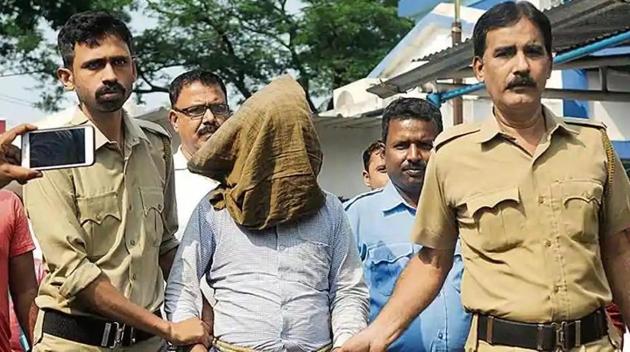
The Madras High Court on Tuesday modified from death to life the sentence imposed on a convict for having sexually abused his minor daughter from the age of seven to 12 years when she attained puberty and thereafter subjecting her to penetrative sexual assault leading to pregnancy and forced miscarriage.

πŸ“Œ What Happened
  • The Madras High Court modified the death sentence earlier imposed on a man who had been convicted of sexually abusing his minor daughter and upheld his conviction under the Protection of Children from Sexual Offences (POCSO) Act.

⚖️ High Court’s Reasoning

  • The court noted that although the crime was heinous and serious, it did not qualify as a “rarest of rare” case under Indian law — the strict standard required for the death penalty. Therefore, the High Court commuted the sentence from death to life imprisonment.

  • The “rarest of rare” doctrine comes from Supreme Court precedents that say the death penalty should be imposed only in exceptional circumstances where the alternative of life imprisonment is clearly inadequate.

πŸ§‘‍⚖️ Other Orders

  • In related orders, the High Court also reviewed sentences of other family members connected to the case (in some reports, the mother’s conviction or sentence was varied or quashed on appeal).

πŸ“ Legal Context

  • Under the POCSO Act, aggravated penetrative sexual assault against a minor is among the most serious offences and can result in severe punishments including death or life imprisonment.

πŸ“ Key Takeaways

  • Conviction upheld — the court maintained that the evidence supported guilt.

  • Sentence reduced — the death penalty was changed to life imprisonment, following legal standards that reserve capital punishment for only the most exceptional cases.

Source: https://www.thehindu.com/news/national/tamil-nadu/madras-high-court-modifies-convicts-death-sentence-into-life-imprisonment-for-sexually-abusing-his-minor-daughter/article67558999.ece

Saturday, November 11, 2023

Uttar Pradesh - Supreme Court says prior conviction cannot be sole ground to impose death penalty; commutes murder convict's sentence

 Summary AI

πŸ§‘‍⚖️ Who was involved

  • Accused: Madan (appellant) — originally sentenced to death for murder.

  • Co-accused: Sudesh Pal and Ishwar were also convicted in the same case.

πŸ“ What the case was about

  • The offences arose from an incident of indiscriminate firing on a group of people in Muzaffarnagar, Uttar Pradesh on 14 October 2003.

  • The firing occurred after local panchayat election rivalry — Madan and others were on one side, and the victims were associated with the rival camp. Some victims were supporters or relatives of the winning candidates.

  • Six people were killed in the incident.

πŸ› Trial court & High Court decisions

  • The trial court convicted Madan and co-accused for murder under various sections of the Indian Penal Code and sentenced Madan and Sudesh Pal to death, while others received life sentences or lesser punishments.

  • The Allahabad High Court later confirmed Madan’s death sentence, though it commuted Sudesh Pal’s death penalty to life imprisonment. 

⚖️ Case Outcome

  • A three-judge bench (Justices B.R. Gavai, B.V. Nagarathna & Prashant Kumar Mishra) heard appeals from Madan and Sudesh Pal.

  • The Supreme Court upheld Madan’s conviction for murder but commuted his death penalty to life imprisonment (to be served without remission for at least 20 years).

  • The Court held that the High Court erred in keeping Madan’s death sentence while commuting Sudesh Pal’s, because the only distinguishing factor was that Madan had a prior conviction. The Supreme Court said a prior conviction alone cannot be the sole basis for imposing the death penalty.

  • The Court emphasised that under Indian law the “rarest of rare” doctrine must be applied — meaning the death penalty should only be imposed when the crime’s circumstances truly demand it, and that mitigating factors (like potential for reform) must be considered. 

  • The Supreme Court of India commuted the death sentence of a man convicted of murder to life imprisonment, holding that a defendant’s prior criminal conviction alone cannot be the sole basis for imposing the death penalty.

🧠 Legal Reasoning

  • The Court emphasised that just because a person has a criminal history (prior conviction), that fact by itself does not automatically justify the death penalty.

  • Instead, courts must carefully weigh all aggravating and mitigating factors in a case before deciding on capital punishment. This includes evaluating:

    • The nature and gravity of the offence

    • The individual’s background

    • The possibility of reform or rehabilitation

πŸ“Œ Broader Legal Principle

  • This decision aligns with the established “rarest of rare” doctrine in Indian law: the death penalty should be reserved only for cases where there is no reasonable possibility of reform, and the circumstances are truly exceptional. A mere history of prior wrongdoing does not automatically make a case fall into that category.

🧾 Key Takeaway

  • The Supreme Court reaffirmed that capital punishment requires nuanced judicial assessment, not just a mechanical reliance on prior convictions. Life imprisonment can be a more appropriate penalty when mitigating factors suggest potential for reform.

Source: https://www.barandbench.com/news/supreme-court-commutes-death-sentence-murder-accused-prior-conviction-not-sole-ground-death?utm_source=chatgpt.com

Tuesday, February 8, 2022

Bombay HC commutes death sentence of man convicted of killing minor girl

08 Feb 2022, 5:41 pm

MUMBAI: The Bombay High Court on Tuesday set aside the death penalty awarded to a man convicted of sexually assaulting and killing a minor girl and sentenced him to life imprisonment. A division bench of Justices Sadhana Jadhav and P K Chavan cited that the case did not fall in the rarest of rare category and the convict was not a hardened criminal and could be reformed, rehabilitated and reintegrated into the society. The court passed its judgment on the Maharashtra government's appeal seeking confirmation of the death penalty awarded to 23-year-old Mohammad Aabed Shaikh.

Justices Sadhana Jadhav

The court, in its order, noted that there was no evidence of sexual assault in the case and that the convict had suddenly thought of seeking vengeance for the humiliation that he had faced after being slapped by the victim's father for not repaying a loan. The bench quashed Shaikh's conviction on the charges of rape under the Indian Penal Code and the Protection of Children from Sexual Offences (POCSO) Act, but said the conviction on the murder charge needs to be maintained. As per the case details, on April 4, 2018, the victim's body was found in a decomposed state in the thorny bushes on an open land used by the locals to defecate.

Justice Prithviraj K Chavan

The victim had gone missing from her house in Bhiwandi town of neighbouring Thane district on April 2. The court noted that for parents, the loss of a child is a psychological loss that creates a vacuum within. "The death of the child was a harsh blow not only to the parents, but to the society as a whole," the order said. The police on April 6, 2018 arrested Shaikh, who was employed in a nearby weaving mill. The police claimed that Shaikh had confessed to his co-worker about committing the alleged offence.

According to the prosecution. 

Shaikh had harboured ill-feelings towards the victim's father, who had allegedly slapped him once for not returning his money. The court observed that while the act committed by the convict was brutal and deserves no lenience, the mitigating circumstances also need to be considered as far as the accused was concerned. "Although the offence is barbaric and heinous, what falls for consideration is whether death penalty is the only punishment that needs to be imposed. The State has failed to bring before us any material to show that there is no scope for reformation or rehabilitation," the bench said.

"It is a settled cardinal principle that it is not just the crime which the Court should take into consideration, but also the criminal, the state of his mind and his socio-economic background," it said. "The accused is a young man. At the time of the commission of the offence, the accused was hardly 20 years of age. Satisfaction of personal vendetta had overpowered him momentarily and in that moment of deprivation of self-control, he had committed the offence," the order said.

Source: 
https://www.newindianexpress.com/cities/mumbai/2022/Feb/08/bombay-hc-commutes-death-sentence-of-man-convicted-of-killing-minor-girl-2416989.html

Monday, January 17, 2022

Bombay High Court commutes death verdict for two women death penalty convicts - Kids' kidnap-murder case

18 Jan 2022

Bombay HC commuted death sentences of two prime accused - both step-sisters - to life term till death in jail, in the sensational case of kidnapping 13 minor children and murdering at least 5 of them.

The Bombay High Court on Tuesday commuted the death sentences of two prime accused - both step-sisters - to life term till death in jail, in the sensational case of kidnapping 13 minor children and murdering at least 5 of them, that rocked the state in the early 1990s. The accused are Seema Gavit and Renuka Shinde who were arrested by Maharashtra Police in 1996 and have so far spent around 25 years in prison.

Another prime accused and their mother, Anjana, who was also arrested and charged in the case, passed away in 1998 during the pendency of the trial. A division bench comprising Justice Nitin Jamdar and Justice Sarang Kotwal commuted the death penalty owing to delays by the government authorities in taking a decision on their mercy pleas. The half-sisters were convicted by the Kolhapur Sessions Court for the stunning kidnappings of 13 children and killing 5 of them brutally, and sentenced them to death in 2001.

Justice Nitin Jamda

The death sentence was later confirmed by the Bombay High Court in 2004 and then the Supreme Court in 2006.

Justice Sarang Kotwal

Source: https://www.nationalheraldindia.com/national/kids-kidnap-murder-case-bombay-hc-commutes-death-verdict-for-2-to-life#google_vignette

Wednesday, March 17, 2021

Rajasthan - Man Gets Death Sentence For Raping Minor Girl

PTI 

Mar 17, 2021

According to police, 21-year-old Sunil Kumar kidnapped the girl who was playing in an agriculture farm near her house in the evening of February 19. 

Jaipur: A special Protection of Children from Sexual Offences (POCSO) court on Wednesday awarded death sentence to a man for raping a 5-year-old girl in Jhunjhunu district of Rajasthan. The court also applauded the police for swift action in the case. According to police, 21-year-old Sunil Kumar kidnapped the girl who was playing in an agriculture farm near her house in the evening of February 19. He took her away on his scooty.

Other children informed her parents, who in turn informed the police, police officer Suresh Sharma said. All police stations were alerted and the girl was later found in an injured state at an isolated area. Kumar was arrested after five hours, he said. The officer said the court convicted Kumar under the Protection of Children from Sexual Offences (POCSO) Act on Tuesday and pronounced the sentence on Wednesday. "Swift action was taken in the case and all the evidence was collected. The charge sheet was filed within 10 days of the incident and the court pronounced the judgment today," Mr Sharma said.

The court appreciated the investigation conducted by the police, saying it was the example of an ideal probe which contained direct evidence, scientific evidence, electronic evidence and circumstantial evidence. It observed that circumstantial evidence collected by the police was enough to crack the case.

Source: https://www.ndtv.com/india-news/man-gets-death-sentence-for-raping-minor-girl-in-rajasthan-2392998

Wednesday, July 8, 2020

Bengal serial ‘chain’ killer sentenced to death for raping, killing schoolgirl

Bardhaman | ByPress Trust of India | Posted by Kanishka

Jul 08, 2020 10:22 am IST

The alleged serial killer who targeted women when they were alone at home, was arrested in the town of Kalna in Purba Bardhaman district in June last year.A man, accused in a series of murders and sexual assaults on women, was sentenced to death by a court here for the rape and killing of a schoolgirl in West Bengal’s Purba Bardhaman district.

Serial killer Kamruzzaman Sarkar at Kalna court in East Burdwan district of West Bengal.(Samir Jana/HT File Photo)

Kamaruzzaman Sarkar, who gained notoriety as a serial ‘chain’ killer for strangling his victims with bicycle chains, was sentenced to be hanged to death by the additional district and sessions judge Tapan Kumar Mondal of Kalna court after being found guilty of the rape and murder of the girl. Sarkar, a small-time trader of discarded materials, is being tried in other courts for alleged sexual assault and murder of at least five other women and murderous attacks on at least three other women in Purba Bardhaman and neighbouring Hooghly districts. Following the order on Monday, Sarkar’s lawyer said that an appeal will be filed before the Calcutta High Court, challenging the conviction and sentence.

The alleged serial killer who targeted women when they were alone at home, was arrested in the town of Kalna in Purba Bardhaman district in June last year. The 42-year-old, attired in trendy clothes, would allegedly enter homes during afternoon hours on the pretext of taking electricity meter readings and then pounce upon the women with a cycle chain and an iron rod, according to the prosecution. Some women had managed to escape attacks by the diminutive man, whose modus operandi was to strangulate them with a chain and then hit them on the head to ensure death. Though he would escape with some valuables from the houses of his victims, theft does not seem to be the motive.

Murdering the women seemed to be his main target, according to district police sources. Police said that Sarkar, married with three children, had even allegedly inserted sharp materials into the genitals of some of his victims following their deaths. Following the murder of a middle-aged woman, the district police had circulated CCTV footage of a suspect wearing a red helmet and riding a red motorbike to all police stations, following which he was apprehended at a check-point. Sarkar is suspected to have killed a woman of Anukhal area on January 27 last year, police said.

On April 4, 2019, two women were killed within a few hours of each other in the Memari police station area of Purba Bardhaman. Another woman of Memari was also killed in the same manner, the police said. Swarupa Bibi of Rongpara here was one of the lucky few to have escaped a similar attack. She was allegedly attacked from behind with a cycle chain, but she managed to shrug off the attacker and raise an alarm.

Source: https://www.hindustantimes.com/india-news/bengal-serial-chain-killer-sentenced-to-death-for-raping-killing-schoolgirl/story-eunpVa3QBMD4w9DLswzCpI.html

Friday, July 5, 2019

Rohtak gangrape-murder: Supreme Court stays death sentence

“Leave granted. The execution of death sentence is stayed,” ordered a bench of Chief Justice Ranjan Gogoi and Justice Deepak Gupta while deciding to hear their plea against the conviction.

New Dellhi | July 5, 2019 02:17 AM IST

The Punjab and Haryana High Court had in March confirmed the death sentence awarded to the seven by a Rohtak court in 2015 for the gangrape and murder of the 28-year-old Nepali woman.

The Supreme Court on Thursday stayed the death sentence handed out to seven persons convicted for the brutal gangrape and murder of a “mentally unwell” Nepali woman in Haryana’s Rohtak in 2015. “Leave granted. The execution of death sentence is stayed,” ordered a bench of Chief Justice Ranjan Gogoi and Justice Deepak Gupta while deciding to hear their plea against the conviction. The Punjab and Haryana High Court had in March confirmed the death sentence awarded to the seven by a Rohtak court in 2015 for the gangrape and murder of the 28-year-old Nepali woman and enhanced the fine imposed on them from Rs 50,000 each to a total of Rs 50 lakh. It observed that despite stern laws, the “deterrence in the matter of sentences including the death sentence is not satisfactory”.

The High Court said it was “shocked” and “aghast” at the “number and nature of injuries caused to the victim, who was mentally unwell” and had been brought to Rohtak from Nepal so she could be looked after by her relatives. The court termed it a “barbaric crime” and defined the acts of the perpetrators as “brutal and predatory”. The woman had come to her sister’s place in Rohtak for treatment and had gone missing from her home in February 2015. Her mutilated body was recovered few days later from near a village. According to the prosecution, the convicts had also attacked the woman’s private parts with bricks.

Source: https://indianexpress.com/article/india/rohtak-gangrape-murder-supreme-court-stays-death-sentence-5815773/